WORLD HISTORY, RELIGION, CIVILIZATION,CULTURAL ENQUIRY
Author: nitinsingh
Postgraduate in International relations. Experience in writing in various journals, from BBC WORLD NEWS SERVICE to India's one of the oldest hindi daily. I like to write on international relations, religion, religious conflict. Social media has bridged the distance between writing and reading. Now writing is not just the expression of one's own thought, but also knowing the expression of people on various subject.
In India, the mother is the Centre of the family and our highest ideal. To us, she is representative of God, as God himself is the mother of the universe.
We have a tradition of worshiping mothers, and the worship of Goddess Durga is a symbol of this tradition. During India’s freedom struggle, people worshiped Goddess Durga as Bharat Mata and were ready to sacrifice everything for her. The idol of Maa Durga represents the unity of all Indians.
When I hear ‘Kolkata’, certain things immediately come to mind—Rasgulla, Fish, Sweets, Dhoti-Kurta, Umbrella, Howrah Bridge, and Durga Puja.
Having visited Kolkata many times, I feel that it is my second home and my favorite city.
My first visit, however, happened quite by accident. There was no fixed plan. My cousin was heading to Kolkata and invited me to join him, but he informed me just a few days before leaving.
Before the trip, I had only heard about Kolkata from my father, who had been there before. He told me about the steamers, the bustling Park Street, and the grand Kolkata Museum, and he insisted that I should visit these places.
I had always known Kolkata for its rich literary heritage. My love for Bengali literature goes back to my childhood—something I believe I inherited.
My grandfather, a lawyer, and an avid literature enthusiast, had a wonderful collection of books in his library. The first Bengali book I ever picked up was Pratham Pratishruti by Ashapurna Devi. That old hardbound edition is still etched in my memory.
During our summer vacations at Grandpa’s house, we would always search for books to read. One such summer, I found Pratham Pratishruti and decided to give it a try. But being too young to grasp its depth, I lost interest after a few pages and handed it to my elder sister.
To my surprise, she loved it! Over the years, it has remained one of her favorite books. Even though she has been living in Denmark for the past eight years and owns a newer version, she still prefers reading the old hardbound copy whenever she visits India.
Journey from Mini Bengal (Varanasi )to West Bengal:
Varanasi is home to the largest number of Bengalis living outside the state of West Bengal. This is why Varanasi is often called “Mini Bengal,” owing to the significant Bengali population that resides here.
I caught a train from Mughal Sarai in Varanasi to Kolkata at night. As soon as I boarded, I went straight to my berth and fell asleep. When I woke up in the morning, the first sight of Bengal greeted me through the train window.
The landscape had changed—the sight of ponds, lotus flowers, and lush greenery made it clear that I had entered a different geographical region.
The train made a brief stop at a station called “Mem Sahab Ka Baithak Khana.”
Curious, I stepped down to take a short walk. To my surprise, I saw many people smoking. Smoking is strictly prohibited inside trains and at railway stations, but Bengali people’s love for smoking is well known.
When I asked one of the smokers about it, he laughed and said, “This is a small station, so no one pays attention. If it were a big station, I would have been fined by now.”
In Kolkata, we stayed at my maternal uncle’s house. He had worked at ITC and had retired voluntarily. As I mentioned earlier, this was my first visit to Kolkata, and it was also an opportunity to witness Durga Puja in the city.
The excitement of experiencing the grand celebration in its birthplace added to my enthusiasm.
The Spread of Durga Puja: From Kolkata to All Over India.
Durga Puja is the biggest festival for Bengalis, but now it is celebrated all over India.
Kolkata was the capital of British India for a long time, so Western education came first. Many educated Bengalis got jobs in the railways and postal departments and moved to different parts of India, from Bengal to Peshawar and from Jammu to Rameswaram.
Wherever they went, they carried their traditions with them. Because of this, the Bengali style of Durga Puja is now celebrated in many places across the country.
Durga Puja in Kolkata: A Unique Blend of Devotion and Celebration
Non-vegetarian food became a recognized part of Durga Puja celebrations in Kolkata due to the influence of British colonial rule.
The way Durga Puja is celebrated in Kolkata is a little different from other places in India. In many regions, Durga Puja is a religious festival with a strong focus on rituals, prayers, and fasting.
People avoid non-vegetarian food, fast, and limit their meals to fruits during the nine days of Navratri.
On the other hand, Durga Puja in Kolkata is not just a religious occasion; it is also a joyful celebration. It is marked by cultural performances, music, dance, and delicious food, including non-vegetarian dishes.
While devotion remains at the heart of both celebrations, the festive spirit in Bengal is what truly sets it apart.
Another key difference between Durga Puja in Kolkata and other places is the pandal.
A pandal is a temporary or permanent structure created to house the Durga idol during the festival, and Kolkata’s pandals are much grander than those in other places.
The sheer scale of the pandals in Kolkata is unmatched, with each one featuring a unique theme that reflects various aspects of Bengali culture and life.
While the idol of Maa Durga remains largely the same every year, the theme of the pandal changes, creating excitement and curiosity, especially among children and the youth.
Another distinctive feature of Kolkata’s Durga Puja is the prasad.
Unlike other regions, where prasad may consist of sweets or fruits, the prasad in Kolkata’s pandals often includeskhichdi—a delicious and comforting dish that holds a special place during the festival.
This khichdi is different from the one commonly made in North India, adding another layer of uniqueness to Kolkata’s Durga Puja celebrations.
A Visual Feast of Bengali Magazines During Durga Puja: Celebrating Regional Literature
College Street Kolkata
The presence of Bengali literature during Durga Puja in Kolkata is truly a unique experience.
The Puja Varshiki or annuals of Bengali magazines are a significant feature of the festival, with vibrant and diverse publications available at magazine stalls.
These magazines have been associated with some of Bengal’s most iconic personalities, including Rabindranath Tagore, Satyajit Ray, Sukumar Ray, and others, all of whom have contributed greatly to the cultural and literary landscape of Bengal.
The experience of seeing these magazines, even without being able to read them, is a special one. It’s also a bit of a reminder of how Bengali literature has flourished in the regional language.
Unlike Hindi-speaking areas where English newspapers dominate, Kolkata maintains a strong literary presence in its native language, making it a hub for regional literature.
Unfortunately, I couldn’t find magazines in Hindi, but my experience highlights the richness of Bengali culture, especially when it comes to literature.
Kolkata’s Durga Puja: A Festival of Devotion, Culture, and Challenges
Kolkata’s Durga Puja is much more than a religious celebration; it is a vibrant blend of culture, tradition, and community.
The grandeur of the pandals, the unique themes, the cultural performances, and the delicious food all come together to create an experience that is distinctly Bengali. However, it also reflects the region’s deep-rooted history, from colonial influences to the enduring impact of Bengali literature and art.
While the festival continues to be a source of pride and joy, the increasing politicization of Durga Puja in recent years raises concerns about the integrity of the celebration.
Despite this, the essence of the festival—devotion, togetherness, and cultural pride—remains strong, making it an iconic and unforgettable part of Kolkata’s identity.
A Glimpse of Sachin Da’s Contribution to India’s Freedom Struggle
*Sachindra Nath Sanyal spent twenty-five years in prison out of the fifty years of his life.
*He was the only revolutionary who was sentenced to life imprisonment twice.
*Sanyal had three younger brothers—Jitendra Nath Sanyal, Rabindra Nath Sanyal, and Bhupendra Nath Sanyal—who were also active in the freedom struggle. Because of their involvement, they too were imprisoned many times and spent years in jail for India’s independence.
*Sachindra Nath Sanyal wrote the book Bandi Jeevan (A Life of Captivity), which is considered the Gita of Indian revolutionaries. The book was translated into more than eight languages, inspiring countless people to take the revolutionary path in the fight for independence.
*Sanyal was the founder of the Hindustan Republican Association.
*He was a close associate of the famous revolutionaries Rash Bihari Bose and Subhas Chandra Bose.
*Sachindra Nath Sanyal was the political mentor (Guru) to many great revolutionaries, including Chandrashekhar Azad, Bhagat Singh, Trilokya Chakraborty, Bhagwati Charan Vohra, Nalini Kishore Guh, Baba Prithvi Singh, Sukhdev, Rajguru, Lala Hardayal, and Ajit Singh.
*Sachindra Nath Sanyal was popularly known as Sachin Da among fellow revolutionaries.
India and its people will always be indebted to Sachin Da. His entire family dedicated their lives to the freedom struggle.
There are hardly any other examples of such commitment. Sachindra Nath Sanyal was not only a revolutionary, but also a philosopher, writer, teacher, and the creator of an entire army of revolutionaries.
Sachindra Nath Sanyal was a great warrior who tried to rekindle the spirit of revolution in India after the 1857 revolt.
I prefer to evaluate people based on their work rather than their family background, but in Sachindra Nath Sanyal’s case, his family also played an important role in shaping his determination and resilience.
Unfortunately, very little has been written about Sachindra Nath Sanyal, and that’s why many people are unaware of his significant contributions.
I decided to write this post to help more people learn about Sachin Da and the immense impact he had on India’s freedom struggle.
The City of Shiva: The Roots of Sachindra Nath Sanyal’s Nationalism
The ancestors of Sachindra Nath Sanyal had settled in Varanasi (Banaras) from Bengal. They were distinguished scholars, and their knowledge was highly respected. Raja Chet Singh of Banaras, impressed by their scholarship, appointed Sachindra Da’s ancestor as a Pandit in his court.
While researching Sachindra Da’s story in the old libraries and reading rooms of Banaras, I came across a short article in an old magazine.
This article, written by Mrs. Monica Sanyal, mentioned Sachindra Da’s ancestor coming to Banaras and being appointed as a Pandit by Raja Chet Singh.
This was remarkable information for me because it revealed something crucial—this line contained the secret of Sachindra Da’s family’s deep connection to nationalism and their attachment to revolution.
During Raja Chet Singh’s reign, a rebellion had failed in Banaras. But what if that rebellion had succeeded? Could India have gained independence on 15 August 1781 instead of 15 August 1947? The date is the same, but the consequences would have been far different.
The ancestors of Sachindra Da were likely closely connected to this rebellion, the Pandit appointment by Raja Chet Singh. Being a scholar, he must have understood why the rebellion failed, and this knowledge would have been passed down through the generations.
This history of failure and resilience deeply impacted the family, and it’s clear that this legacy influenced Sachindra Da’s actions.
He made an extraordinary effort to free India through armed revolution. He formed a revolutionary organization, united revolutionaries across the country, and kept fighting for India’s independence. It’s likely that the “failed rebellion of Banaras” fueled his determination and the long struggle for freedom.
Sachindra Nath Sanyal: A Hero’s Journey from Childhood to Freedom Fighter
Sachindra Nath Sanyal was born on June 3, 1893, in his ancestral home in the Madanpura locality of Varanasi. His father, Harinath Sanyal, was a nationalist, and his mother, Kshirodhavasini, was a brave, strong, and religious woman. They raised their children in a nationalist environment.
His father worked as an accountant in the army, which meant the family moved frequently. Because of this, Sachindra Nath’s childhood was spent in cities like Kolkata, Varanasi, and Peshawar.
Two childhood incidents stand out and show the nature and determination of Sachindra Da:
@ When his father was posted in Shimla, Sachindra Da once saved his younger brother Jitendra’s life. Jitendra had slipped and was about to fall off a hill, and Sachindra Da risked his own life to pull him to safety.
@ On another occasion, a young British horse rider pushed his mother while riding. In response, Sachindra Da bravely beat up the young man, standing up against the British in his own way.
In 1908, after the death of his father, Sachindra Da’s family moved back to their ancestral home in Varanasi.
The Beginning of Sachindra Nath Sanyal’s Revolutionary Life
Sachindra Nath Sanyal’s journey as a revolutionary began in Varanasi. He started a branch of the Anushilan Samiti, a group dedicated to armed revolution. When the British banned the Anushilan Samiti, the organization was renamed the Young Man Association.
This group had an internal committee, and the young members pledged their loyalty by signing in blood before Mother Kali. As part of their ritual during Kali Puja, they would carve white pumpkins, which symbolized British rule.
Sanyal, as the right-hand man of Rash Bihari Bose, helped set up several revolutionary centers. He played a key role in the Hindustan-Ghadar Party, an organization that had around eight thousand members. Many people who traveled to India by ship were recruited into the group, including passengers on ships like Komagatamaru, Nishanmaru, Tosha Maru, and SS Korea.
Inspired by Rash Bihari Bose, Sanyal worked towards a revolution that would be as powerful and widespread as the one in 1857. He met with Vishnu Ganesh Pingale, a leader of the Ghadar Party, in Banaras. Sanyal also traveled to Punjab, where he met Kartar Singh Sarabha and other Ghadar leaders, supplying them with revolvers and ammunition.
Soon, Rash Bihari Bose took over leadership in Punjab, and the revolutionaries spread across Banaras, Punjab, and military cantonments, preparing soldiers for an uprising. The revolution was planned for February 19, 1915, with soldiers from places like Miyamari and Ferozepur Cantonments ready to join the fight. Sadly, the plot was uncovered, and many of the revolutionaries were arrested.
First Life Imprisonment of Sachindra Nath Sanyal
Sachindra Nath Sanyal worked tirelessly to prepare soldiers for the revolution. He visited the military cantonment in Varanasi multiple times, and the revolutionaries of Varanasi even gave Vishnu-Ganesh Pingale ten powerful bombs. However, Pingale was arrested in Meerut with these bombs. The soldiers in the Varanasi cantonment resisted giving up their weapons, leading to the court-martial of several soldiers.
On June 26, 1915, Sachindra Nath Sanyal was arrested in Varanasi. He was shackled and sent to Lahore Jail. Later, he was brought back to Varanasi for a trial in a special tribunal.
Along with Sanyal, his two younger brothers, Ravindra and Jeetendra, and Damodar Swaroop from Kota were also tried. Sachindra Nath Sanyal and Girija Babu were sentenced to life imprisonment, while Jitendra Nath Sanyal was sentenced to two years and his property was confiscated. His mother was also thrown out of their home.
The Return of a Revolutionary: Sachindra Nath Sanyal’s Release After Years of Imprisonment
After Britain’s victory in World War I, the British government decided to release many political prisoners who had been incarcerated during the struggle for India’s independence. Sachindra Nath Sanyal, one of the most prominent revolutionaries of his time, was among those released.
Sanyal had been imprisoned for several years, including a period spent in the notorious Cellular Jail (Kala Pani) in the Andaman Islands. The British authorities, after the war, decided to release many political prisoners in the hope of easing tensions and stabilizing their rule in India. This release came in 1920, shortly after the end of the war, as part of a general amnesty granted to many revolutionaries and activists.
While Sachindra Nath Sanyal’s release was a significant moment in his life, the impact of the British decision was twofold. It marked the return of a key figure in the revolutionary movement, who continued to be an inspiration for future generations of freedom fighters. On the other hand, Sanyal, despite being free from imprisonment, faced ongoing surveillance and restrictions on his movements, as the British continued to regard him as a serious threat to their colonial rule.
Life Imprisonment for the Second Time
* Soon after his release, Sachindra Nath Sanyal was imprisoned again for making bold speeches. This time, he was sentenced to two years in prison.
After being released, Sachindra Sanyal became involved in the Kakori Train Action (which was later called the Kakori Train Action instead of the Kakori Conspiracy). The revolutionaries, part of the Hindustan Republican Association, looted the government treasury from a train at Kakori, near Lucknow.
Many people were arrested in connection with this action. The court sentenced Rajender Nath Lahiri, Thakur Roshan Singh, Ashfaq Ullah Khan, and Ram Prasad Bismil to death.
Sachindra Nath Sanyal, along with others like Sachindra Nath Bakshi, Yogesh Chandra Chatterjee, Mukund Lal, Manmanath Gupta, and Govind Charan, was sentenced to life imprisonment and sent to the Cellular Jail in Port Blair.
Sachindra Nath Sanyal was released in 1937 but was arrested again in 1939 when the Second World War began.
This time, it was alleged that he was trying to start an armed revolution with Japan’s help. During this time, a prisoner in the jail contracted tuberculosis, and the prison staff refused to treat him because of the fear of the disease. Sachindra Nath Sanyal took responsibility for caring for the prisoner, and in the process, he contracted tuberculosis.
Sachin Da died on 6th February 1943 from tuberculosis. His sacrifice, determination, and willingness to give everything for India’s freedom set him apart.
The history of India’s struggle for independence cannot be written without remembering Sachindra Nath Sanyal. His legacy lives on in the hearts of the people, and his life of sacrifice will continue to inspire future generations.
A short glimpse of why I decided to write this post.
A few days ago, my wife had to go for corona vaccination, I had already been vaccinated two months ago so I was aware of the corona vaccination center nearest to my house, on the request of my wife, I agreed to go with her .The corona vaccination center was five kilometers away from my house. It was a government hospital. Surprisingly there was silence when we both reached the Corona Vaccination Center .Then a nurse showed up, we asked her for information on corona vaccination. She pointed out to the primary school adjacent to the hospital, understanding his gesture, we proceeded towards the primary school, why the vaccination was in the school instead of the hospital? I soon came to know the reason of this from the people who have came their to get vaccinated. Now the speed of vaccination is getting fast, and due to more and more people coming for vaccination, patients of other diseases were facing problems in the hospital, the hospital ground was small. I found the decision of the hospital administration to be right. Due to Corona, all the schools are closed, in such a situation there is no problem to use the school building as a vaccination center.
The vaccination campaign was going on in full swing in the school. There were separate queues of women and men. My wife went to the women’s row and queued up. There were like fifteen, twenty women in the queue, all waiting for their turn wearing masks. (Corona vaccination is free all over India)I had few minutes so I started looking carefully at the school courtyard, buildings, artefacts made by school students Bright colors were used extensively in the artworks made by young children. Similarly, the geometrical figures made by the children were also full of bright, dazzling colors. Suddenly my attention was drawn to an artwork depicting national symbols. Seeing a fair chance to check my general knowledge, I decided to read it. To my surpriseI was unaware of a national identity.(National sweet – Jalebi.)I was astonished even more when I saw the name of Hockey written in the national game. Under the right to information, some people had asked the government for information regarding the national game, According to the information given by the government, India does not have anyNational sport.It was a misinformation about the national identity inside the school building! I felt very strange, I looked for any staff of the school but I didn’t find any, I saw a suggestion box . I quickly wrote information related to this topic on a piece of paper and dropped it in the suggestion box. Two or three days after this incident, I got a call from my childhood friend Saurabh. While talking, I mentioned this incident to him, he was also surprised. I mentioned symbols of national identity to my son, he was also not aware of some symbols, so under general information I thought of writing a post on this topic.
FEW IMPORTENT NATIONAL SYMBOLS
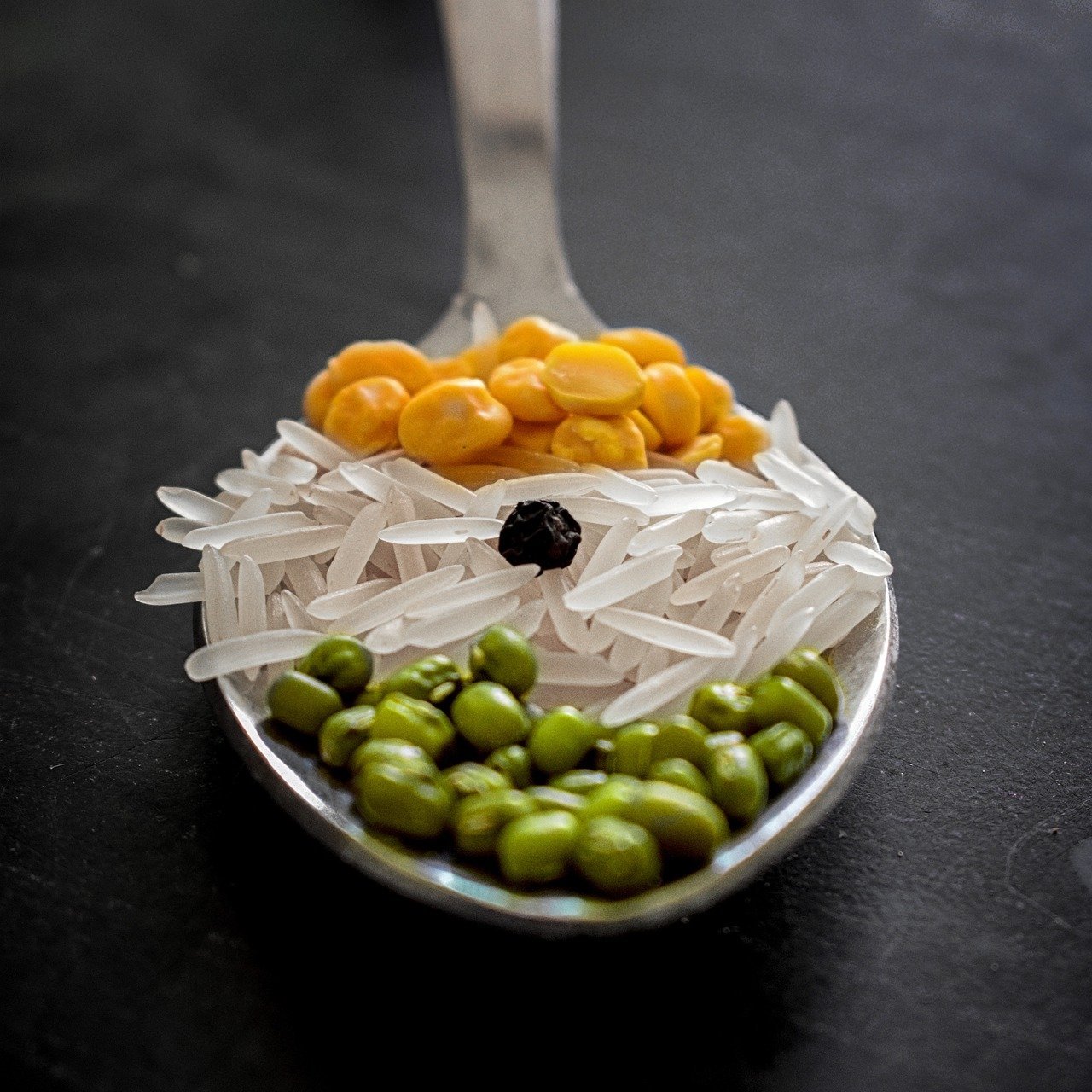
pixabay
NATIONAL -FLAG
The national flag of India has three equal-proportioned stripes. Saffron is at the top, white in the middle and green at the bottom. There is a blue wheel in the middle of the white stripe. This wheel is taken from the Ashoka Pillar kept in the Sarnath Museum.There are twenty-four spoked in it, which symbolize being working (moving) round the clock. Saffron color symbolizes courage, white color symbolizes peace and coexistence, while green color represents fertility and prosperity of the country.
MAHAKAVI -TAGORE
pixabay
NATIONAL ANTHEM
The national anthem of India is Jana Gana-Mana. This national anthem is written by the great poet Rabindranath Tagore. The national anthem of India was originally written in Bengali. After independence, the independent Constituent Assembly of the country accepted it as the national anthem on 24 January 1950. Instructions are issued from time to time regarding the correct version of the National Anthem, the occasions on which it should be played or sung and the need to give respect to the National Anthem in order to maintain the proper dignity on these occasions.
NATIONAL SONG
The national song of India is Vande Mataram. The national song is taken from the book Anand Math written by Bankim Chandra Chatterjee. The song vande Mataram was composed by Bankim Chandra Chatterjee in 1870, in 1882 this song was added to the book Anand Math. In his novel Anand Math, Bankim Chandra wrote the valor of the revolutionaries who challenged the British and made the Indians realize that freedom is their first right, which is the solemn duty of every Indian to achieve. The novel, based on the revolt of the monks of Bengal against British imperialism, had a song on the worship of the motherland. The title of this song was —- Vande Mataram. Later this title became the epitome of opposition to British imperialism. Its popularity can be understood from the fact that it was accepted for greetings throughout the country. For more information about this subject please visit :-https://nithinks.com/2021/01/25/bharat-mata-mandirmother-india-temple-and-vande-mataram/
ASHOKA LION CAPITAL OF SARANATH
ASHOKA LION CAPITAL (SARANATH)
ASHOKA LION CAPITAL(NATIONAL EMBLEM OF INDIA )
The Lion Capital is the national emblem of India.It has been taken from the Ashoka Lot found in Sarnath. It has four lions standing facing all the four directions. The Dhamma Chakra was built on these four lions, which was found in many pieces in the excavation. These four lions are standing on a solid base. There are also four other animals on the base. Each of these four animals has its place as a symbol of Buddhism: the lion represents Sakyasimha, lion of the Sakya clan, with the voice of a lion; the elephant signifies Sakyamuni entering the womb of his mother Mayadevi in her dream, but also Sakyamuni as the tamer of wild elephants; the horse, besides being a symbol of temporal royalty, is the vehicle that carried Prince Siddhartha on his journey of renunciation; finally, the bull is the great inseminator, here symbolising the Buddha’s teaching, the Dharma. The horse and elephant together support the Wheel-turning Monarch. In the center is the Dhammachakra. (ASHOKA THE SEARCH FOR INDIA’S LOST EMPEROR.page 334.335)For more information about this subject please visit :-https://nithinks.com/2020/12/03/hindu-philosophy-and-the-importance-of-peace-9-11-1893-9-112001/
LOTUS
pixabay
LOTUS
Lotus :- The national flower of India is lotus. In ancient Hindu civilization, it has the status of a sacred flower. It has always been found in the description of Hindu gods and goddesses and in the picture stories. In many sculptures, Gautam Buddha is also depicted sitting on a lotus flower, or in a meditative posture. Many mythological stories are related to this flower, it has also played a major role in the first freedom struggle of India. Roti(Indian bread ) and lotus were the symbols of rebellion in the first freedom struggle. Lotus is found in abundance in almost the whole India, especially in the rural areas of Bengal.
PRAYAGRAJ
VARANASI
pixabay
GANGA (GANGES)
National River:- The Ganges River is considered the most sacred river by the Hindus. It originates from the Himalayas and joins the Bay of Bengal. In this journey, the river Ganges completes a journey of about 2500 km. Many ancient and religious cities of Hindus are situated on the banks of this river. HARIDWAR,PRAYAGRAJ KANPUR,VARANASI,MIRZAPUR,FARRUKHABAD, KANNAUJ,BHAGALPUR,PATNA,HAJIPUR,MUNGER,KOLKATA etc.)Many religious festivals of Hindus are organized in the cities situated on the banks of this river. For more information about this subject please visit :-https://nithinks.com/2021/01/18/makar-sankranti-is-an-ancient-hindu-festival-or-the-burden-of-old-tradition/
A GIGANTIC BANYAN TREE
VAT VRIKSHA (BANYAN TREE)
The Banyan tree has got the status of the National tree of India.It is found in abundance in almost all of South Asia. Many religious customs and festivals of Hindus are associated with this tree. The Vat Vriksha is also called the Banyan tree. There is a story behind it. The Banyan tree is huge, due to which many shopkeepers used to set up their small shop under the Banyan tree in the village, countryside, naturally the Banyan tree also protected them from heat, winter rain, and for this, they had to spend no money. Or no special effort had to be made. In India, the merchants are also called Baniya, for this reason, the British started calling this tree by the name of Banyan. Hindu women fast and worship the banyan tree for the long life of their husbands.Surely this tradition must have started in ancient times, influenced by the vastness of the Banyan tree, and its long life. In Hindus, in such religious festivals, there is an association of that festival with some ancient event. For more information about this subject please visit :-https://nithinks.com/2021/07/07/how-imperialism-turned-a-tree-of-longevity-into-a-tree-of-death/
JALEBI
NATIONAL SWEET
The national sweet of India is Jalebi. Equally popular all over India. A staple breakfast in North India. In North India, it is eaten with milk, curd, and rabri. It is also mentioned in ancient religious texts. In modern times, many culinary experts have done many experiments with Jalebi, and have found methods of making it in different ways.
(pixabay)PEACOCK :-KING OF BIRDS
Lord Krishna
NATIONAL BIRD
Peacock has been the hallmark of Indian culture. It is mentioned a lot in ancient scriptures. Lord Krishna of Hindus is depicted with peacock feathers since ancient times. Peacock is mentioned as the vehicle of Kartikeya, the son of Lord Shiva. It is represented by carvings in all the major ancient buildings of India. It also had a prominent place in the Painting of India. Peacock is also called the king of birds in India due to its unique beauty, charming color. When the peacock dances with its wings spread in the rainy season, then a wonderful, panoramic view can be seen. The peacock was declared the national bird of India on 26 January 1963. PEACOCK meat was eaten in ancient times.
Formerly, in the kitchen of Beloved-of-the-Gods, King Piyadasi,(ASHOKA ) hundreds of thousands of animals were killed every day to make curry. But now with the writing of this Dharma edict only three creatures, two peacocks and a deer, are killed, and the deer not always. And in time, not even these three creatures will be killed.
At present the hunting of peacock is completely banned. There is a provision of imprisonment for any person from three years to seven years for hunting a peacock.
TIGER
Goddess Durga, a symbol of power in Hinduism, can always be seen riding a tiger. Since ancient times, the tiger has been considered a symbol of power and majesty. Due to strength, agility and immense power, the tiger has got the status of the national animal of India. Tigers were hunted indiscriminately during the British Raj, resulting in a sharp decline in their numbers. After independence, the focus was on increasing their numbers. Tiger Project started in 1973, many tiger reserves were established. Soon promising results began to appear. At present, about 75% of the world’s tigers are found in India. The tiger is a powerful icon of India’s cultural and natural heritage, and its survival has been a top priority for WWF-India since it was founded.
During the British period, a great hunter named Jim Corbett also did a lot of work on the conservation of tigers. A great hunter and protector ? It will sound a bit strange but it is the truth. Jim Corbett had hunted only man-eating tigers and leopards in his life. A tiger reserve has been named Jim Corbett National Park in his honour.Jim Corbett has also written some great books on man-eating tigers and their terror. Man -Eaters of Kumaou is one such book. The tiger is also a very shy animal, so there is very limited literature available on them. Those who are interested in tigers, rural life of Uttarakhand, ancient temples must read this book
Born here of parents born here from parents the same, and their parents the same—-Walt Whitman.
SUBAH -E-BANARAS (MORNING IN VARANASI)
“Benares(Varanasi) is older than history, older than tradition, older even than legend and looks twice as old as all of them put together “ MARK TWAIN.
So much has been written about Varanasi that to write anything one has to repeat the facts. In simple words, on the basis of my experience, I can say that one should try to understand Varanasi like a simple poetry. A poetry that has been present in its natural form in every period of time.If you have the patience to read poetry (information on internet has exhausted patience) if you have the passion to peep into history, then Banaras is the best. You may say that Varanasi is like onion –like onion has many folds,in the same way if we consider Varanasi city as onion, then there are many layers of history, it can be experienced with a little patience. The beginning of human civilization, the struggle against imperialism, or the present day, everything can be seen in Varanasi.Just a little ability to smell history, or a little fondness to feel history, Banaras is an unforgettable experience.
Go to Benares or Kashi, that most ancient of cities, and give ear to her murmuring. Does she not tell you of her immemorial past-of how she has gone on while empires have decayed, of Buddha who came to her with his new gospel, of the millions who have gone to her through the ages to find peace and solace? Old and hoary, decrepit, dirty, smelly, and yet much alive and full of the strength of ages, is Benares. Full of charm and wonder is Kashi, for in her eyes you can see the past of India, and in the murmur of her waters you can hear the voices of ages long gone by.
HOLY DIP (SUBAH -E-BANARAS(VARANASI)
HOLY DIP
“I think Banaras(KASHI,VARANASI) is one of the most wonderful places I have ever seen. It it has struck me that a westerner feels in Banaras very much as an oriental must feel while he is planted down in the middle of London”. (MARK TWAIN)
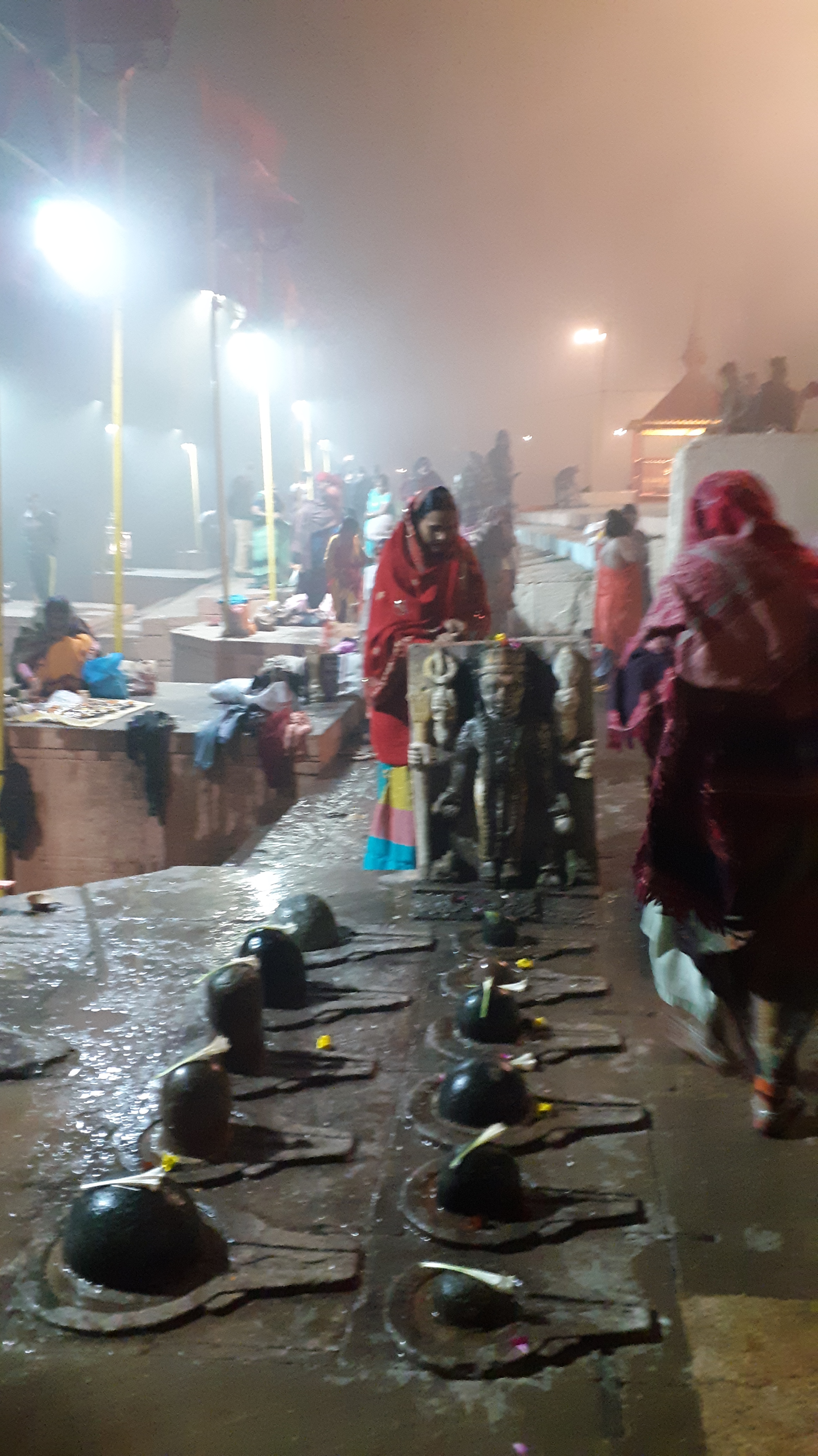
Holy Dip:- All the ancient cities of India are situated on the banks of rivers. This is because of the ease of transportation. Varanasi is no exception to this. The city of Varanasi is situated on thebank of the holy Ganges.There is a very ancient tradition of bathing in the Ganges river in the city of Varanasi.This tradition of getting up early in the morning and bathing in the Ganges continues even today.The day of an ordinary citizen of Banaras(BANARSI) begins with bathing in the Ganges. Hindus from all over the world come to Varanasi to take a holy dip in the Ganges. After taking a holy dip in the Ganges, the Ganges water is offered to Lord Shiva in temples.It feels amazing to be a part of this thousands of years old tradition. Hindus also have a tradition of burning the dead body .After burning the dead body, the ashes are flown into the holy rivers.Hindus from all corners of the world come to Varanasi to immerse the ashes of their beloved in the Ganges. In Hinduism, kindness to living beings is of great importance. After a holy bath in the Ganges, giving food to birds, monkeys, cows, dogs, is a common practice.There are also many Akhadas (Gymnasium) on the banks of the Ganges. Many youths go to theseAkhadas to do exercise after taking a holy dip in the Ganges. You can understand what are the thoughts of the Indian people on any subject by simply visiting Varanasi, in other words it is a good place to feel the pulse of India. So much diversity and similarity is rarely seen anywhere else. Other than Varanasi, such a view can also be seen in Mahakumbh, but Mahakumbh holy bath is organized once in twelve years.For me, taking a holy dip in the Ganges has always been about feeling connected to my ancestors. I am only a link in the journey of life since eternity. The ashes of ancestors are contained in the Ganges. An inexhaustible link – from the past to the future, in the present I am part of this link.Sadhu, Sanyasi, Grihasta, old , young , woman, man, White, Brown South-Indian, Punjabi, Rajasthani, Bengali all at one place. What to say about the difference in language and clothing? A mini version of the country, and a wonderful experience.
There are about eighty-four ghats in Varanasi. Each has its own importance and history. The stairs of the ghat made of sandstone, every building is a completely different feeling. If one is not a native of Varanasi then it will be a very strange experience. Sandal paste on the forehead after the holy bath, Roli’s tika makes the bathing process complete. There is nothing to worry about the means of transportation in the morning. Means of transport are available in the morning from any corner of the city. Varanasi city wakes up in the morning. If you start the day with a cup of tea, or do yoga in the morning, then the experience is even better. There are many tea shops on the Ghat. Foreigners can also be seen doing yoga on the Ghats.
The marvelous beauty of the Ghats by boating
Boating
I love the area where the holy river Ganges flows in Varanasi. (SHIV Matsya Purana)
A panoramic view of the Ghats of Varanasi can be seen from a boat.The Ghats of Varanasi are like a painting on a huge canvas, in which time has filled innumerable colors. Boating is the only way to experience this huge painting and the colors of the times. By the way, for the best experience, one should travel from Assi Ghat to RajGhat. Boats are accessible at every Ghat. The boatmen have a general knowledge of the history of the Ghat, the most fun is to hear the stories related to the Ghats from these boatmen.In these stories, history, imagination, experiences passed down from generations, the art of telling stories that are now fading away can be seen. Google does not give information every time .If a particular jetty is preferred, these boatmen also stop the boat on the shore for a while at that Ghat on request. Many religious rituals of Hindus are also performed by boatmen, for this reason they also have good knowledge of religious customs. If someone knows how to row a boat, then by requesting them, he can row the boat himself. By the way, how hard or how easy it is to row a boat, everyone should row the boat at least five minutes to understand this. . Smaller boats are fine for one or two people, larger boats for a group. Boats are available for hire on time.If you want to listen to the sound of water with peace, and get acquainted with history, then a small boat is better. A bigger boat is better if you want to be a part of the enthusiasm of an energetic religious crowd.If you have time, try to be a part of both. Although rowing can be done at any time, but early morning is the best time.
GHAT
Going from one Ghat to another is like entering from one time block to another.
“The city illumines the truth and reveals reality. It does not bring new wonders into the scope of vision, but enables one to see what is already there. Where this eternal light intersects the earth, it is known as Kashi”(Varanasi).(Diana L. Eck)
Just like the aroma of a delicious dish, Its color increases the desire to taste that dish manifold, but can never give the taste of that dish. The only way to taste the food is to taste it. Same is the case with the Ghats of Varanasi, The beauty of the Ghats of Varanasi can be seen by boating, but to feel it from the heart, it is necessary to spend time at the Ghat. Each Ghat is like a page of history, and the history of India passes through Banaras itself. All Ghats in Varanasi have their own importance, and it is not possible to write all about them here. For a bit more information, I would like to mention something here based on my experience.
ASSI GHAT
ASSI GHAT :-Spiritual Paradise or Spiritual Disneyland ?
Assi Ghat:- According to mythological legends, the city got its name due to its settlement in the middle of rivers named Varuna and Assi.For this reason the city is known as Varanasi. At present Assi Ghat is very famous among foreigners. There are many exotic cuisine restaurants around the Ghat. All types of restaurants can be found here Italian, Spanish, French. Large numbers of foreigners visit Assi Ghat sometimes to feel the transformation of Assi Ghat into a Spiritual Disneyland .(I came to know this word from a French woman, she is very much influenced by Hindu religion and culture and has been living here for thirty years. She was angry with the present generation, both Indian and foreigners. She believes that the present generation is adopting yoga and spirituality as a fashion, as a fun, without being familiar with its basic meaning.By the way, every old generation generally has such complaints from the new generation.
GOSWAMI TULSI DAS TULSI GHAT
VARANASI CITY OF SHIVA AND RAM
Tulsi Ghat:– The culture of India cannot be imagined without Ram. Ramcharit Manas was composed by Tulsi Das on this Ghat. This was the composition of Tulsidas ji in the vernacular language of the Hindu religious text Ramayana. This was the time when the temples of Varanasi were being demolished by the Muslim imperialists, invaders. In order to instill confidence in the defeated Hindus again, Tulsidas started (RAMLEELA) based on the life of the most sacred character of the Hindus – Ram. Soon this RAMLEELA became popular . (Ramlila had an incomparable contribution in preserving the traditions and culture of Hinduism)Even today. It was Tulsi Das ji’s unique talent that after the destruction of Hindu temples, he converted every Hindu heart into a Hindu temple.There is no village or city in the whole India, especially in North India, where Ramlila is not staged during Dussehra. Tulsidas ji died here in 1623. The items used by Tulsi Das in his life are also stored here. For more information about this subject please visit :- https://nithinks.com/2019/10/07/islamic-imperialism-breaking-of-idols-hindu-struggle-past-present/
RAJA RAMCHANDRA KI JAI
The whole earth is the Sepulchre of famous men. They are Honoured not only by columns and inscriptions in their own land, but in foreign nations on memorials graven not on stone but in the hearts and minds of men .Thucydides, History of the Peloponnesian War, 404 BCE.
SHIVALA BHAVAN NOW KNOWN AS CHET SINGH OR CHAIT SINGH GHAT
Chet Singh Ghat
The history which could have been written on 15th august 1781 was then written years later on 15th august 1947.
SHIVALA BHAVAN NOW KNOWN AS CHET SINGH OR CHAIT SINGH GHAT On the banks of the Ganges, Shivala Bhavan, now known as Chet Singh Ghat, the Maharaja of Benares was arrested and detained here by order of Warren Hastings. The disobedience of Maharaj by the soldiers of Warren Hastings provoked the soldiers of Maharaj’s army and then the people also joined the soldiers of Maharaj. The “Benares Rebellion”could not leave a significant mark in its history due to lack of vision and inability to take decisions in the King of Banares. In order to shed light on this incident and its importance,I have made the basis of the letters of The British officers of that time, their statements, Buildings and ruins connected with this incident in and around Benares. Sampurna Nand He were a great educationist and was also the Chief Minister of Uttar Pradesh and the Governor of Rajasthan. (His great-grandfather Sadanand ji was the divan of King Chet Singh.)
“If Chet Singh had not run away at this time and would have attacked the garden of Madhodas, I would surely have been killed and thus rebellion would have spread all around”. Warren Hasting.
By the way, India’s first war of independence is considered to be 1857, and history does not give any place to it if it happens. But why the Varanasi Raja of Chet Singh Ghat and the East India Company struggle could not become a freedom struggle? This has definitely become a bitter lesson in history. This ghat is a witness to this even today that if the leadership becomes unconscious, then the public should take a decision with their own conscience. For more information about this subject please visit :- https://nithinks.com/2020/08/14/benares-rebellion-15august-1781/
RAJA HARISHCHANDRA STORY
Sita is typical of India— the idealized India. The question is not whether she ever lived, whether the story is history or not, we know that the ideal is there.
HARISHCHANDRA GHAT :- There are two ghats in Varanasi for the cremation of dead persons. Harishchandra and Manikarnika. Both the very ancient Ghats have their own importance. According to the Hindu scriptures,King Harishchandra was the ancestor of Lord Rama. This place was named Harishchandra after his name.There is hardly any other such story of truth, sacrifice and patience than this one mentioned below.
Harishchandra was the king of Ayodhya.Once Harishchandra saw a dream while he was sleeping that he has donated his kingdom to a sage Vishwamitra. Later the king forgot about this dream, after a few days Vishwamitra came to the king’s court and reminded the king about his dream. The king is always a symbol of justice. Harishchandra had a strong belief that the king should always set an exemplary example before the subjects, so he immediately left the kingdom, and gave the entire kingdom to the sage Vishwamitra. But Vishwamitra was not pleased even by this. And demanded Gurudakshina from the king. There was nothing left to give to the helpless king, he asked Vishwamitra for some time, and left his kingdom with his wife and son and went to Kashi. Here Harishchandra did not get work anywhere, as a result the king got the job of an assistant helping in the cremation of dead persons in a shamsan. The king’s wife started working as a maidservant with a moneylender. Once the king’s son Rohitasva was bitten by a snake, due to which he died. The queen took the body of her son and came to Shamasan Ghat for the last funeral. The husband of the queen( Harishchandra ) , who was working as an assistant in the funeral rites of the dead at the shamsan ghat, was deeply saddened to see the death of his son and the condition of the queen, but demanded the tax that was levied on burning the dead body. The queen said that I had nothing to pay in the form of tax, on which the king said that “He cannot allow the body to be burnt without tax, because it will violate the orders of their master”. The king told the queen that she should tear off a part of the sari she was wearing and pay it as tax. The poor queen had no other option, as a result, she tore the sari from the edge and wanted to pay the tax to the king. Suddenly sage Vishwamitra appeared. Sage Vishwamitra returned life to the king’s son Rohitashva. The sage told King Harishchandra that he wanted to see to what extent the king was successful in following the truth. While returning the king’s kingdom, he called him a Godlike king. This story inspired many people. Referring to a incident in his biography( The story of my experiments with truth) Mahatma Gandhi has told that in childhood, the story of King Harishchandra left an indelible impression on him, according to Mahatma Gandhi, he used to get emotional after remembering this story.
GANGA AARTI
Dashashwamedh:- is also one of the most famous Ghats of Varanasi. It is estimated that in the second century AD, the famous Bhavashiva kings defeated the Kushanas and after performing Ten Ashvamedha sacrifices, took a bath here, due to which it was named Dashashvamedha. For some years, a grand ceremony of Ganga Aarti is organized here, in recent times a huge crowd gathers to see this aarti. Aarti of Dashaswamedh in the evening at the Ghats is the main attraction of Varanasi. The electrification of the ghats at night gives a mesmerizing view, the beauty of the ghats, and the aartis are a sight to behold. It is my belief that there is a different fun in visiting the Ghat in the evening and at night, but the soul of Varanasi can be felt only in the morning.
THE LAST VOYAGE BENARES (VARANASI) LAST JOURNEY (1883) Edwin Lord American painter, known for his paintings on eastern countries. A dead man is being taken by boat to Manikarnika for the last rites. In my opinion this is the best painting of Manikarnika ghat that was ever made, amazing color coordination, no effect of time, as if it is not a painting but a live telecast of Manikarnika on television. Wonderful. Even today a hand driven fan made of palm leaves is found in every house of Varanasi. There has been no change in Manikarnika Ghat and the surrounding buildings even today. Even today in Varanasi similar clothes of sadhus, sacred saffron color of Hindus, boats are the hallmark of the Ghats of Banaras, even today these umbrellas (CANOPY) CHATRI(bamboo and palm leaf umbrella) are used in the same way. everything still exists today.
CANOPY, CHATRI(bamboo and palm leaf umbrella)
MANIKARNIKA :-Undoubtedly Manikarnika is the greatest Samasan . It is believed that once Shiva and Parvati came here to bath. After taking a bath, Mata Parvati came to know that while taking bath, her earrings(karnphool) have fallen here, since then the place was named Manikarnika. This place has been considered very sacred among the Hindus. Lakshmibai, (RANI OF JHANSI .INDIA’S WARRIOR QUEEN) born in Varanasi, was named Manikarnika after this place. (Her nick name was Manu for the same reason) . It is very difficult to predict when the practice of burning bodies on Manikarnika started. It is believed that the burning of dead bodies never stops here. Burning of dead bodies has continued here for thousands of years. In Hinduism, birth and death are considered to be a cycle of life, for this reason there is such a belief about Manikarnika that —- here, the stopping of dead cremation for any reason is a sign of destruction of creation. The death of the person born is certain, this is the absolute truth. Death as a celebration – the same philosophy is hidden in the Holi of Masan. Death is seen as a celebration in Manikarnika. For detailed information on this topic please visit :- https://nithinks.com/2021/03/26/rangbhari-ekadsi-masan-holiashes-of-dead-persons/
A woman selling vegetables in the street leading to the Ghat
PANCH -GANGA GHAT (BINDU MADHAV)
PANCH GANGA GHAT :-
Schools should introduce one more, very important, subject- The History of labor, the brilliant and tragic history of man’s struggle with the natural world, the history of his discoveries and inventions, his victories and triumphs over the forces of nature.” And a little later he wrote: “I believe very strongly in miracles made by the intelligence and imagination of man; I know no other miracles.” (MAXIM GORKY)
Panch-Ganga is among the five major and oldest Ghats of Varanasi.Hindus believe that Panch-Ganga Ghat is situated at the confluence of five holy rivers.
(YATHA, KIRNA, DHUTPAPA, SARASWATI, GANGA & YAMUNA)There was also a custom of drinking Ganges water here by the newly married couple after marriage. This is like a European practice of drinking hypocross, or musket. Its ancient name was Bindumadhav Ghat.This Ghat got its name from the ancient temple of Bindumadhav (Lord Vishnu). In the seventeenth century, this ancient temple was demolished by the Islamic ruler Aurangzeb, and a mosque was built from the rubble of that ancient temple. Since then the name of this place became Panch Ganga in place of Bindumadhav.With the tradition of bathing in the holy river on special occasions, and with such small habits, did our ancestors manage to save their religion! Could we save our religion only with the help of our culture! Who were those people who not only kept their traditions alive even after the destruction of their temples, idols of Gods but also defeated foreign invaders? For more information about this subject please visit :-https://nithinks.com/2021/01/18/makar-sankranti-is-an-ancient-hindu-festival-or-the-burden-of-old-tradition/
He purged by his sword the land of Hind from the filth of infidelity… and the impurity of idol-worship, and left not one temple standing… When he arrived at Mirat [Meerut] all the idol temples were converted into mosques. He then marched and encamped under the fort of Delhi. The city and its vicinity were freed from idols and idol-worship, and in the sanctuaries, mosques were raised by the worshippers of one God. The royal army proceeded towards Benares,(Varanasi) which is the centre of the country of Hind, and here they destroyed nearly one thousand temples. (Sadruddin Muhammad Hasan Nizami)
RAJ GHAT :-The crossroad of history (meeting center of different periods)
RAJ GHAT:- Almost all the great historians are of the opinion that ancient Varanasi city was near Rajghat. Near Rajghat, the Varuna River meets with the Ganges River, due to this river, the city got its name Varanasi.And in ancient times This river got its name due to the Varan (a species of trees) The riverVaranavatiis mentioned in the Atharva Veda.( period:-1000-900BCE) . Many historians, archaeologists have estimated from the material obtained from the excavation of Rajghat that the ancient Varanasi city existed in 11th or 12 century BC. At present there is also an important bridge built during the British era, at present it is known as Malviya bridge .During British rule it was called Dufferin Bridge. Built over the Ganges on the Grand Trunk Road from Dhaka to Peshawar.This route is the oldest and longest-distance route in South Asia. In ancient times it was known as Uttar Marg, Sadak -e -Azam Road in Mughal era, and Grand Trunk Road in British period.About one kilometer from the Rajghat bridge is the confluence of the Varuna and Ganga rivers. From Rajghat towards Varuna-Ganga Sangam one has to go through the educational institutions of Krishnamurti Foundation. This is a beautiful road. Magnificent buildings of educational institutions and covered with giant trees. The area of confluence comes as soon as the chain of educational institutions and giant trees ends. The entire area covered by trees in this area gives a magical feel. If you leave the slopes of the Sangam and go straight, you will have to cross a small culvert and meet another historical ancient route — Panchkoshi Marg. The confluence of holy rivers is always considered a sacred place in Hinduism. The oldest temples of Hindus are built at the confluence of such rivers. There is also an ancient temple here which is known as Adikeshav. It is difficult to say when this temple came into existence.
ADIKESHAV
The temple is mentioned in the copper plates of the Gahadavalas who ruled Varanasi from the eighth to the eleventh century. Similarly, at the holy confluence of Ganga-Gomti, there is an ancient temple of Markandeya Mahadev in Varanasi.The mention of this temple is also found in the holy book of Hindus Mahabharata. For more information about this subject please visit :-https://nithinks.com/2021/03/14/mahashivratrishiv-barat-and-varanasi/ When the Adi Keshav temple would have been built can only be predicted. All the major temples of Banaras were demolished in 1193-1194. Paganism is a crime in Islam. Muhammad Bakhtiyar Khangot the right to demolish and plunder the worship house of Hindus, Buddhists from the Gangetic plain, he accomplished this with complete cruelty.This temple was rebuilt in 1807 by Sindhia of Gwalior.Now there is a sense of reverence in this holy temple but nothing is left from the point of view of art. No tyrant can take away the feeling of faith. For more information about this subject please visit :-https://nithinks.com/2021/03/10/dawn-of-civilization-and-shiva-shiva-ganga-varanasi/ Assi Ghat presents a global image, of a changing India, or of the globalization of the world. Tulsi Das, Benimadhav, and Adi Keshav are witnesses to the struggle of Hindus against imperialism, Chet Singh Ghat is a living example of the importance of leadership, while Dashaswamedh, Harishchandra, and Manikarnika are living symbols of Hindu values for thousands of years.
SARANATHGautam Buddha gave his first sermon in Sarnath.
LIGHT OF ASIA
SARANATH :-Varanasi, is also calledKASHI(ONE OF THE OLD NAME). The word Kashi has its origin from the word Kash. Its means light. Here light does not mean just light. Light here means“Light of knowledge”. Nalanda, Taxila, and Varanasi were the major centers of education in ancient times. After attaining enlightenment, Gautam Buddha gave his first sermon here in Sarnath. In human history, this teaching is known as theDharma Chakra Pravartan.OR “TURNING OF THE WHEEL OF THE MORAL LAW” By the time of Gautam Buddha, Varanasi had lost its glory to a great extent. But till then Varanasi was so glorified, and Varanasi had the pride of being the capital of all-knowledgethat Gautam Buddha chose this city for the first sermon. Like King Harishchandra, Gautam Buddha was also a Kshatriya king. With his teachings,Gautam Buddha made Hinduism more acceptable, and versatile.Opposed the increasing rituals in Hinduism, and laid great emphasis on the concept of non-violence of Hinduism. Western historians have told Buddhism to be separate from Hinduism, there is no basis for this.In India, where Hindus have a God like reverence for Gautam Buddha, Japan, China, Sri Lanka, Korea and the countries of South East Asia accept the teachings of Gautam Buddha as a great master.Many teachings of Hinduism have been carried over to Buddhism.
“Victory breeds hatred, for the conquered is unhappy”. “You cannot travel the path until you have become the path itself.”
“As I am, so are these. As are these, so am I.’ Drawing the parallel to yourself, neither kill nor get others to kill”
THE ASHOKA LION CAPITAL OF SARANATH
The Ashoka emblem is the national emblem of India. It has been taken from the Ashoka Lot found in Sarnath. It has four lions standing facing all the four directions. The Dhamma Chakra was built on these four lions, which was found in many pieces in the excavation. These four lions are standing on a solid base. There are four animals on this circular base. Each of these four animals has its place as a symbol of Buddhism: the lion represents Sakyasimha, lion of the Sakya clan, with the voice of a lion; the elephant signifies Sakyamuni entering the womb of his mother Mayadevi in her dream, but also Sakyamuni as the tamer of wild elephants; the horse, besides being a symbol of temporal royalty, is the vehicle that carried Prince Siddhartha on his journey of renunciation; finally, the bull is the great inseminator, here symbolising the Buddha’s teaching, the Dharma. The horse and elephant together support the Wheel-turning Monarch In the center is the Dhammachakra. (ASHOK THE SEARCH FOR INDIA’S LOST EMPEROR.page 334.335)This twenty four spoked wheel is situated in the middle of the national flag of India. Presently this Ashoka’s lot is preserved in the museum of Sarnath. Probably this is India’s first onsite museum.
In this post I have explained Varanasi on the basis of my experience. Every person has a different point of view. I tried to introduce people to some facts of this ancient city, and important events of Indian history. Varanasi is a wonderful city — full of contradictions, with many opinions, ideologies. This diversity gives it the status of eternal city. At present there is hardly any country whose residents do not reside here. The history of Varanasi gives a glimpse of the history of the entire culture of India. My view is that History is not just a lifeless structure of dry events, in this we can see the reactions of the society and religious expressions also completely, and Varanasi is a wonderful work (kriti)of this subject.For more information about this subject please visit:- https://nithinks.com/2019/12/31/oldest-living-city-happy-new-year/
“Dancing mad with joy,
Come, O Mother, come!
For Terror is Thy name!
Death —is in Thy breath
And every shaking step
Destroys a world for e’er.”
“It all came true, every word of it, “he interrupted himself to say.
“Who dares misery love,
Dance in Destruction’s dance,
And hug the form of death—
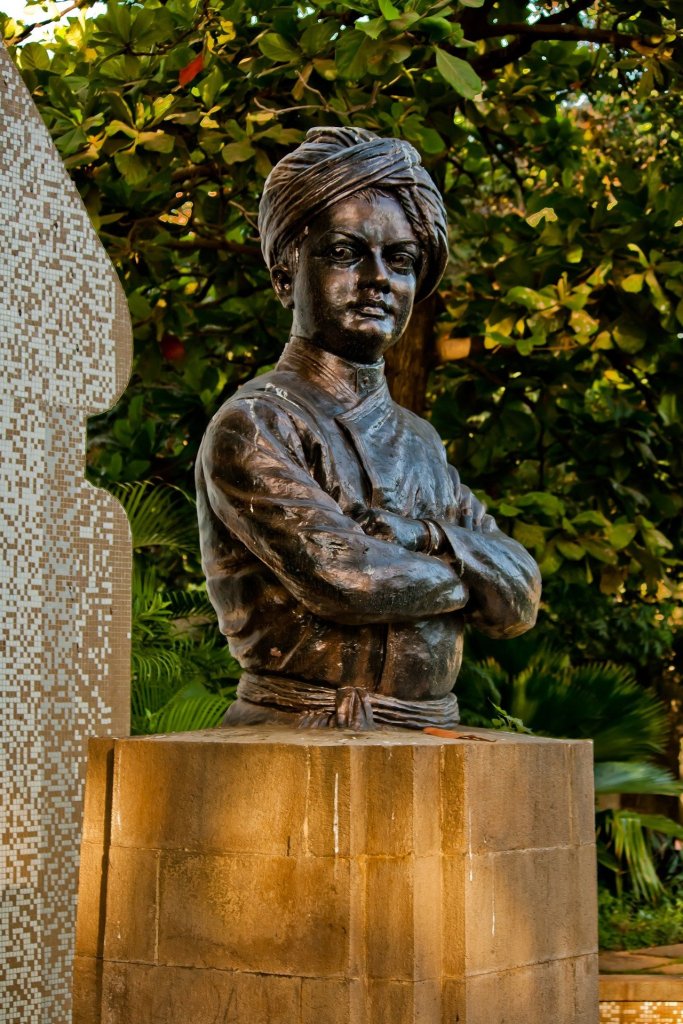
SWAMI -VIVEKANANDA
Vivekanand was a very lion among man. We preceive his influence still working gigantically. We know not well how, we know not where, in something not yet formed, something leonine, grand intutive uphearing that has entered the soul of India and we say-Behold! Vivekanand still lives, in the souls of the mother and in the souls of the children.
A Journey Through Swami Vivekananda’s Life: The Quest for the 107th Photograph
Swami Vivekananda’s life and legacy continue to inspire millions around the world. In my journey to learn more about him, I set out to accomplish a seemingly small goal: finding the 107th photograph of Swami Vivekananda.
Though I have not succeeded yet, this pursuit has led me to an unexpected treasure trove of knowledge about Swamiji and his profound influence on the general public.
The Collection So Far: 106 Photographs
Over time, I have collected 106 photographs of Swami Vivekananda, each one a window into his life, personality, and mission.
Every image tells a story—of his strength, his spiritual vision, and his deep connection with humanity. The search for the elusive 107th photograph, however, has proven to be a challenge, but it is one I am determined to continue.
A Deeper Understanding of Swamiji
While the 107th photograph remains undiscovered, the journey itself has been transformative.
Along the way, I’ve encountered countless stories and lesser-known facts about Swamiji’s life. From his fearless speeches to his humble interactions with common people, every detail adds a new layer to my understanding of this extraordinary individual.
Varanasi: A City That Shaped Vivekananda
One aspect of Swamiji’s life that particularly stood out during my research was his connection to Varanasi (Banaras).
@This ancient city, with its spiritual energy and rich intellectual culture, left a lasting impression on him.
@Varanasi was the site of significant moments in his life:
@His encounters with scholars and monks.
@The unforgettable lesson to “face fear” during the monkey incident at Durgakund.
@His final days in the serene surroundings of Gopal Lal Villa in 1902.
Despite its importance, surprisingly little has been written about Swami Vivekananda’s deep ties to Varanasi. This city shaped his philosophy in profound ways, and it deserves more attention in discussions of his legacy.
A Commitment to Continue
Though the search for the 107th photograph has yet to bear fruit, I remain committed to uncovering more about Swamiji’s life. His teachings remind us that perseverance is essential, even in the face of challenges.
This journey has become about more than just a photograph; it’s about understanding and sharing the life of a man whose vision continues to guide humanity.
Swami Vivekananda 1891
The Mystery of Swami Vivekananda’s Photograph: Jaipur or Varanasi?
Swami Vivekananda’s life continues to captivate and inspire, and even a single photograph can spark curiosity and debate. Among the many photographs attributed to him, one image has been the subject of much discussion. Two distinct opinions surround this photograph:
@The Jaipur Connection: Many believe this photograph was taken during Swami Vivekananda’s stay in Jaipur.
@The Varanasi Perspective: Some family members of those with whom Swamiji stayed during his time in Varanasi are convinced that the photograph was taken there.
Unraveling the Mystery
This debate highlights not only the richness of Swamiji’s legacy but also the gaps in our collective understanding of his life. Both perspectives have merit, and the truth may lie in untold stories yet to be uncovered.
The Jaipur narrative aligns with Swami Vivekananda’s extensive travels across India, where he was warmly welcomed by kings and commoners alike. Jaipur, known for its vibrant culture, was one such destination where his presence left an indelible mark.
The Varanasi connection draws from the testimony of families with a direct link to Swamiji’s stays in the holy city. Varanasi, a place of deep spiritual significance for Swamiji, holds an enduring place in his journey.
A Window Into Swamiji’s Life
Whether the photograph is from Jaipur or Varanasi, it remains a valuable piece of history—a window into the life of a man who dedicated himself to the upliftment of humanity.
What makes this debate even more fascinating is the way it throws light on the enduring impact of Swamiji’s visits to various cities and the personal connections he formed along the way.
Hindu sages and saints have contributed a lot in the independence of India. Many social reforms were also initiated by sages and saints. Tea revolution in the eighteenth, nineteenth centuries (under which the style of drinking tea in India changed forever.
Tea was recognized as the beverage of the common Indian from the beverage of the Europeans)
“I believe tea has helped us, as a nation. At least, our tea drinkers outnumber those who consume alcohol, One may even go so far as to claim that the spread of alcoholism has been arrested in this country because of tea.” SANKAR THE MONK AS MAN
How hard it is to believe that we Indians were unaware of tea (chai) a few centuries ago. Now hardly any Indian starts the day without tea. (The people of South India are lucky in this case that they have the option of choice, they can choose between tea or coffee according to their convenience) It is a matter of happiness that today in the use and production of both tea and coffee, India is one of the major countries of the world. According to a national survey, fifteen cups of tea are consumed in India compared to one cup of coffee.
Gradually tea became a part of our daily life. It is also like that we Indians were unaware of potato, and tobacco,(Potato &Tobacco was introduced by Portuguese ) today without them the daily life of many Indians cannot be imagined.
TEA -LEAF (CHAI PATTI)LEMAN TEAHERBAL (SPICES)
Herbal teahas a centuries-old history in India. Even today there is a lot of custom in India to drink it, but today this drink is also called Kaadha. Consumption of decoction has its benefits. Herbals like black pepper, mint leaves, basil leaves, liquor ice, cloves, ginger etc are used in the decoction. India has historically been a stronghold of natural medicines and spices, so it is common for such beverages to become popular. Similarly, lemon tea is also very popular in India. In recent years, the increasing awareness of people towards natural beverages has made Kaadha very popular. It has been used as a medicine in colds. In recent times,its popularity has increased a lot in the outbreak of Corona. There will be hardly any home or hospital in India where this herbal drink is not being used.
CHAI
The extraordinary story of ordinary tea The story of tea was written in India during the Bengal rule of the East India Company. And within a few years it turned into a mass movement. The East India Company was a commercial company, whose main reason for its arrival in India was the trade of spices. After the Battle of Plassey in Bengal, the East India Company’s feet were firmly established in Bengal. During this time, efforts were made by the people of East India Company to grow tea in India. It is believed that tea plants were first planted in 1787 by a British, Mr. Kydd, in a garden called Shivpur in Howrah. This was a failed attempt. Later at one place Mr. Kydd admitted that the climate of Howrah was not suitable for the growth of tea leaves. By the year 1820, some prominent Bengali families (Prince Dwarkanath Tagore) were also engaged in the tea leaf business in Assam in an effort to grow tea leaves in Bengal and its surrounding areas.
In 1864, India’s tea leaves were sold for £3 million by the Assam Company at an auction in Mincing Lane, London, England. This was just a beginning.
This was the effort of the East India Company and the famous Indian businessman of that time to capture a part of the tea market in England. Gradually these efforts paid off, by 1870 the share of China’s tea market in England was 90%, after thirty years it was 10%, this was possible due to the development of tea gardens in India and Sri Lanka. Till then the practice of drinking tea had not started among Indians, it is believed that the trend of tea was slowly starting in the city of Kolkata, India. Kolkata was then a rapidly growing British city in India. The political and economic capital of India. Kolkata was also called the White Cityin those days because the population of white people in the main area of Kolkata was more than the native people, and Kolkata had more white people than any city in Asia. The British people had a habit of drinking tea according to their English tradition, gradually this habit was being adopted by the elite Indians also. In those days, association with British families and eating with them was common in the famous and prosperous houses of Kolkata, as a result many customs and traditions were adopted conveniently by the noble Indians, among them the habit of drinking tea. was involved.
Tea and Nationalism
In those days a new industry was also spreading rapidly in Bengal. That was the printing industry. For the first time in India, the trend of books, newspapers was increasing, many British and Indian businessmen of Kolkata were also seeing the possibility in this new business. Due to the spread of education, the number of educated people in India was also increasing. The old gurukul system of education (which was largely based on Hindu traditions) and Muslim education which was based on madrasas was now getting out of date. Western education and employment based on western education were increasing, a new intellectual class was emerging among Hindus. (Muslims were keeping distance from this education system) This new intelligentsia was to some extent British in language, lifestyle and food, but inspired by Hindu culture, religion, and the spirit of patriotism. Many of these intellectuals did not accept to work under the British government and started working independently in journalism, Hinduism and social reformer. There was also a lot of drinking tea among such people, due to which soon the tag of white people’s beveragewas removed from tea.
MAHAKAVI – TAGORESWAMI VIVEKANANDA
Tea Break চা বিরতি
Bengalis have tea in their and blood and nobody can do anything about it. Bengalis will never forget that coffee smells like burnt shal leaf, while Darjeeling tea tastes like champagne. Sankar- The Monk as MAN
Rabindra Nath Tagore, a prolific nationalist of the time, and world-renowned Writer, Poet, Philosopher ( first Indian who received the Nobel prize of Literature ) Dwarka Nath Tagore was his grandfather, who started the tea business in India with the British people. He was counted among the tea lovers of that time. He has shared his love of tea with people many times.
Swami VivekanandaA youngsannyasi(MONK) whose popularity was at its peak in those days,a voice that was a ray of hope among the nationalists,was a tea lover. This young monk left an impact on the world’s finest minds of his time. The uncivilized image of Hindus and India in the West and America, which was based on some prejudices, was broken by this great sannyasi, not only kept the true picture of India in front of the world, but alsointroduced the world to yoga and meditation for the first time.The great scientist Nikola Tesla, writer Aldous Huxley,Tolstoy, Ja de Salinger Rockefeller, Mahatma Gandhi, Subhas Chandra Bose, Arvind Ghosh, Nivedita, Jamshedji Tata, Vimal Mitra Shachindranath were influenced by his ideas. Vivekananda’s habits were always the subject of discussion in those days, especially among the youth and the intelligentsia in Kolkata. Swami Vivekananda, along with other poets, writers, and intellectuals associated with the Rama Krishna Mission, have mentioned the popularity of tea at many places due to Vivekananda’s influence. Swami Sardananda once jokingly told Swami Vivekananda’s younger brotherMahendranath that the habit of drinking tea to the people associated with the Math is due to your brother Vivekananda. For more information related to this topic please visit:- https://nithinks.com/2021/01/11/is-vivekananda-still-relevant-today-national-youth-day/
BELUR -MATH HOWRAH (KOLKATA )
Tilak the Chaiwala of Belur :-
Once Tilak, (LOKMANYA BALGANGADHAR TILAK)the great nationalist of that time, came to Kolkata. Tilak came to Belur Math to meet and discuss with Swami Vivekananda. On the request of Swami Vivekananda,Lokmanya Tilak made tea for all the people present in the Math. Undoubtedly, this tea party is ranked among the most historic tea parties in India. This incident is mentioned by Shankar in his famous book the monk as man Giving the details of this incident,Sankar has told that’ Tilak had brought nutmeg, mace ,cardamom ,cloves, and saffron with him. He boiled these things together, added the tea leaves, milk and sugar ,and made tea.’ This incident shows that Our current Prime Minister Narendra Modiwhose father had a small tea shop, and whose childhood is spent selling tea, he is not the onlychaiwala in Indian politics.
BODHI- DHARMA
There is a belief in china that in the fifth-sixth century, a monk from India, Bodhidharma, reached China for the propagation of Buddhism. He is credited to propagate Buddhism in china.It is believed that Bodhidharma spentnine years meditating in a cave, due to constant waking and not sleeping,Bodhidharma was feeling sleepy, due to which Bodhidharma cut off his eyelid in anger and threw it away. A few days later a tree grew at the same place. The leaves of that tree had a special quality – drinking a drink made from the leaves of that tree did not cause sleep and felt energized. This was the first tea plant.
Tea Capital of India :-Undoubtedly Kolkata is the tea capital of India. From the planting of tea leaves to the cultivation, export, acceptance of tea in the society, everything is built in the history of Kolkata itself. Although tea shops will be found in every city, nook, street square of India, but the variety of tea found in Kolkata is rare. The way of serving tea is also varied. From plastic glasses, glasses, fancy cups, to clay pots. Many shops in Kolkata still make tea in the old style kiln, but the tea found at these shops is usually strong tea.(This is the Indian version of Britain’s sailorstea) The taste of tea in a cup made of clay changes completely, the smell of earthy aroma in strong tea – wonderful. In Kolkata, the use of milk in tea is also less, in Kolkata tea leaves are more important, after taking a few sips of tea, it is understood that the whole game here is of tea leaves.
Cultural Capital of India & Some very unique tea shops:- Varanasi is not only the cultural capital of India, it is also called Mini Kolkata or Mini Bengal. The reason for this is a large number of Bengalis here.Most Bengalis live in one city outside the state of Bengal, then it is Varanasi.The trend of tea in Varanasi has come from Kolkata itself. Here too many old tea shops serve tea in earthen cups. (KULLHADA) But there is a fundamental difference in the tea found here – milk is used more in the tea here. Apart from this,basil leaves, ginger, bay leavesare commonly used in tea here. In their taste and aroma, it reduces the taste of tea leaves . There is one more thing that is worthy of praise at the tea stalls in Varanasi – the special attention to cleanliness. A small tea shop on the side of the road also washes the utensils used for making tea with hot water several times a day. In Varanasi,teais a beverage to be consumed at any time, and at any place.
“I think Banaras (Varanasi) is one of the most wonderful places I have ever seen. It it has struck me that a westerner feels in Banaras very much as an oriental must feel while he is planted down in the middle of London”. (MARK TWAIN)
Swami Vivekananda’s painting at Varanasi GhatSome Aghori monks enjoying tea
MAHASAMASHAN AND TEA SHOPS
If one is not familiar with the traditions and philosophy of Hindu religion, then the tea shops and tea drinking places in Varanasi can surprise him. The most unique seems to be the hundreds of tea shops on Samashan. In Hinduism, the last rites of a dead person are performed on the banks of rivers or water bodies, in Varanasi also on the banks of the holy Ganges there are two very ancient ghats Manikarnika and Harishchandra, both these ghats are used for cremation. There are many tea shops on both the ghats. On Manikarnika, there are more tea shops than shops of materials used in cremation. The funeral rites never stop on Manikarnika, day and night. Similarly, tea is available at any time at the tea shops here. The well-wishers of the deceased who come to attend the last rites can also be seen drinking tea at the time of the last rites of the deceased. To know the thousands of years old tradition of Varanasi’s Samashan, Aghori please visit:- https://nithinks.com/2021/03/26/rangbhari-ekadsi-masan-holiashes-of-dead-persons/ This is a normal reaction. The use of tea was once banned in Hindu monasteries considering it to be a stimulating beverage, today drinking tea is a common practice among Hindus in any religious activity. Many Hindus do not consume grains during the fast, they only survive on fruits, but tea is also drunk during this time. To know the story and tradition related to fasting in Hindu festivals please visit:- https://nithinks.com/2021/03/14/mahashivratrishiv-barat-and-varanasi/ I would like to end this post with these words of Swami Vivekananda.
READ THE VEDAS AND UPNISSHADS, AND DRINK TEA –NO HARM IN IT!
The world considers You inauspicious, O Destroyer of Lust who plays in the smashan smeared with the ash from funeral pyres, wearing a necklace of human skulls, with ghouls for comrades. But for those who remember You with devotion, O Bestower of Boons, You are supremely auspicious.
(Shiva Mahimna Stotra, 24)
“The city illumines the truth and reveals reality. It does not bring new wonders into the scope of vision, but enables one to see what is already there. Where this eternal light intersects the earth, it is known as Kashi”(Varanasi).(Diana L. Eck)
GANGA AARTI
MARK TWAIN
“I think Banaras(KASHI,VARANASI) is one of the most wonderful places I have ever seen. It it has struck me that a westerner feels in Banaras very much as an oriental must feel while he is planted down in the middle of London”. (MARK TWAIN)
Perhaps due to Varanasi’s unique festivals, beliefs and customs, Mark Twain said that ——–
It seems to me that the greatest importance of religious festivals is that during the period of Islamic imperialism and British rule, we remained connected to our roots through them.FOR MORE INFORMATION ABOUT THIS SUBJECT PLEASE VISIT :- https://nithinks.com/2021/03/10/dawn-of-civilization-and-shiva-shiva-ganga-varanasi/ Varanasi is the holiest city of the Hindus. Due to this, religious events can be seen here throughout the year, but Shiva is the city god here, hence the human form of Shiva, and the celebration of events related to his life is the identity of Banaras. Similarly, Rangbhari Ekadashi and Holi of Masan, which take place a few days before Holi, are festivals dedicated to Lord Shiva in Banaras.
wish for peace and prosperity of the whole world
SHIVA
The imagination of Shiva’s human form in Varanasi is also ancient.FOR MORE INFORMATION ABOUT THIS SUBJECT PLEASE VISIT :- https://nithinks.com/2021/03/14/mahashivratrishiv-barat-and-varanasi/ There is a belief that the festival of Holi starts, obedience is sought from the oldest person of the city (Shiva, of course). It is believed thatShiva brought Parvati to his city Varanasi for the first time on this day after marriage.On the request of the towns people, Shiva went out to bless the towns people along with Mata Parvati.
In any festival of Hindus, there is definitely a love for nature, a sense of compassion for creatures, it is also associated with this festival.
AMALA TREE
Rang -Bhari Ekadasi is also known as Amal Ekadasi. It is believed that God resides in the tree. Lord Vishnu is worshiped on this day. Many people also worship Lord Vishnu sitting under an amla tree. Amla has great importance in the Indian system of medicine, Ayurveda. Consuming amla in any way is considered very beneficial for health.
Any person ( related to any religion, culture, civilization) can become a part of this festival. I believe that it should be a part of this unique festival at least once in life. Such religious festivals are not only symbol of our culture, civilization, but also a history of non-violence and such a deep association of Hinduism with nature. Twenty-three hundred years ago, the Buddha’s message of non-violence, Ashoka’s first message of human rights was not a miracle, it had a specific thought for hundreds of years behind it. We can also get a glimpse of our tradition and history in Gandhi’s non-violence and Ramrajya. Varanasi is not only one of the oldest cities in the world, but it is a tableau in the history of India. Surprisingly, this city is completely a modern city, but completely immersed in history, there is no time in the history of India that does not pass through Varanasi. Forgetting yourself for a while in any street of Varanasi is like a journey through a period of history.
Long and narrow is the ancient Path, – I have touched it, I have found it, – the Path by which the wise, knowers of the – Eternal, attaining to salvation, depart hence to the high world of Paradise.
Brihadaranyaka Upanishad.”
Rangbhari EkadashiFestival
I found that I had to choose one of two things.
Let me wait for the procession at a distance so that I can click clear and good photos.
Let me also be a part of the procession, and feel this festival wholeheartedly, I chose this , and joined the procession without hesitation. There was a lot of crowd, people were running with colors and Gulal . The street was very narrow, there were old houses on either side of the streets. Children and women were standing on the roof of the houses, they were showering rose petals, colors, gulal on the procession. The view was fascinating, many small temples were also found on the way to Vishwanath temple. The procession speed was decreasing at the arrival of these temples, the procession was moving again after some religious rituals. Excitement was at its peak. By the time I reached my destination Vishwanath temple, I was drenched in color. The path of a few hundred meters was about an hour long.
The world considers You inauspicious, O Destroyer of Lust who plays in the smashan smeared with the ash from funeral pyres, wearing a necklace of human skulls, with ghouls for comrades. But for those who remember You with devotion, O Bestower of Boons, You are supremely auspicious.
(Shiva Mahimna Stotra, 24)
Humans are not the only devotees of Shiva, the devotees of Shiva include Ghosts, Ghoul, Demons all.(BHOOT-PRET, PISACH,RAAKHCHAS ,GANDHARV,KINNER) It is believed that in the Rangbhari – Ekadashi, these Shiva devotees kept themselves away from the festival so that the townspeople would not be afraid to see them. On the next day of Rangabhari Ekadashi,Shiva himself came to Shamsan to celebrate with these unique devotees, that is why the Holi of Shamsan is celebrated.
To understand the Holi of Masan it is necessary to understand a few things more.
AGHORA OR AGHORI
Aghora :- Aghora means ” DEEPER THEN DEEP‘ Aghora is the most unique and mysterious branch of Hinduism. Followers of this faith (AGHORI) worship the destructive form of Shiva-MAHAKAAL. The meaning of death has a completely different meaning to Aghori. Aghori believes that death is to be personified and deified. Aghoris crave not for physical death but for destruction of all their limitation .KILLING themselves by internal or external processes.
DEATH &THE SAMASHAN
LAST JOURNEY (1883) Edwin Lord American painter, known for his paintings on eastern countries. I do not even have the basic knowledge of painting, but the truth of this painting, the selection of colors is unfounded. It is a document of the time reflecting the history of Manikarnika. A dead man is being taken by boat to Manikarnika for the last rites.
” WHEN YOU COME INTO THE WORLD YOU ARE CRYING, AND THE WORLD IS LAUGHING.YOU MUST LIVE YOUR LIFE IN SUCH A WAY THAT WHEN YOU GO THE WHOLE WORLD WILL CRY,AND YOU WILL LAUGH.”
MAHASAMASHAN :-MANIKARNIKA
According to the belief of Hinduism, the body of a dead person is burnt. The place where the dead bodies burn is called samasan, or masan.Undoubtedly Manikarnika is the greatest Samasan .
It is believed that once Shiva and Parvati came here to bath. After taking a bath, Mata Parvati came to know that while taking bath, her earrings(karnphool) have fallen here, since then the place was named Manikarnika. This place has been considered very sacred among the Hindus. Lakshmibai, (RANI OF JHANSI .INDIA’S WARRIOR QUEEN) born in Varanasi, was named Manikarnika after this place. (Her nick name was Manu for the same reason)
Undoubtedly Manikarnika is the greatest Samasan . is the symbol of burning of pyres for thousands of years.
According to Hinduism, death in Varanasi leads to salvation. For this reason, Hindu dead bodies are brought to Varanasi from far away for cremation. Two ghats in Varanasi, Manikarnika and Harishchandra, are built for the cremation of the dead. It is very difficult to predict when the practice of burning bodies on Manikarnika started. It is believed that the burning of dead bodies never stops here. Burning of dead bodies has continued here for thousands of years. In Hinduism, birth and death are considered to be a cycle of life, for this reason there is such a belief about Manikarnika that —- here, the stopping of dead cremation for any reason is a sign of destruction of creation. The death of the person born is certain, this is the absolute truth. Death as a celebration – the same philosophy is hidden in the Holi of Masan.
MAHAKAAL–THE GOD OF TIME
Different names of Shiva are not just synonyms, they reflect different qualities of Shiva. Shiva is the public welfare form of God. Shankar is a symbol of the Lord’s demonic and destructive powers.
Mahakal represents the infinite powers of Shiva. In the Mahakal form, Shiva controls the time without any feeling to run the entire creation smoothly. Mercy cannot be expected from Shiva’s Mahakal form, not even a change of rules. Mahakal itself is the time, completely disinterested, heartless. The only unbounded power of the entire universe. MASAN,SAMSAN OR BHASMA (ashes of dead persons )It is not only Holi but a symbol of the events of creation. My knowledge in this subject is very limited. For more information on this subject read Sadhguru’s Death an inside story or Robert E. Svoboda’s Aghora At The Left Hand of God . I have written this blog based on these books and my years of Varanasi.
Mahashivratri is a very special festival for Hindus. According to mythology, this is the wedding day of Lord Shiva and Goddess Parvati.
On this holy day, people take a bath early in the morning, and many also bathe in sacred rivers. They offer water on the Shivalinga and pray for peace and happiness.
People also keep a fast on this day. Temples take out beautiful Shiva processions, where everyone sings and celebrates with devotion.
____________________________
Shivratri Katha: The Story of the Kind Hunter Chitrabhan
Long ago, there lived a hunter named Chitrabhan. He lived in a small village near a thick forest. Chitrabhan earned his living by hunting animals and selling their meat. He was not a rich man. In fact, he often struggled to earn enough for his family.
Chitrabhan’s Problem
One day, Chitrabhan needed some money urgently. He went to a businessman in his village and borrowed a loan. The businessman told him to return the money soon. Chitrabhan agreed, but days passed and he could not earn enough to pay him back.
When the time came to repay the loan, Chitrabhan had no money. The businessman became angry and put him in prison. Chitrabhan stayed in jail for some time. At last, the businessman released him on one condition: Chitrabhan must return the loan as soon as possible.
Chitrabhan knew he had to do something. He decided to go deep into the forest and hunt animals to earn money quickly.
A Special Night
This day was no ordinary day. According to the Shiva Purana, it was Mahashivratri, the great night of Lord Shiva. But Chitrabhan did not know this. He had no food or water with him the whole day because he was too worried about earning money. By evening, he was hungry and tired.
He climbed a tree near a pond, thinking that animals would come there to drink water. He waited with his bow and arrow, but he was so tired that he dozed off while sitting on the tree. Without knowing it, he had spent the day fasting.
The First Deer
After some time, a pregnant deer came to the pond. When Chitrabhan heard the sound, he woke up and quickly picked up his bow and arrow. He aimed at the deer.
But suddenly, the deer spoke in a soft and gentle voice. She said, “Kind hunter, please do not kill me today. I am about to give birth. Let me go this time. I promise I will return soon.”
Chitrabhan felt kindness in his heart. He thought, “If I kill her, the baby will die too.” So he lowered his bow and let the deer go.
The Second Deer
A little while later, another deer came to drink water. Chitrabhan again aimed his arrow. But this deer also spoke to him and said, “I am looking for my husband. Please do not kill me until I find him. I promise to return.”
Chitrabhan felt pity for her too. He allowed her to leave.
The Third Deer
After some time, a third deer came to the pond. She was not alone. With her were two small baby deer. When Chitrabhan got ready to shoot, the mother deer said, “I have to take my children to their father. Please let me go today. I will return once I leave them safely.”
Chitrabhan again felt compassionate. He let the mother and her little ones go free.
The Fourth Deer
At last, the forest became quiet again. Suddenly, a fourth deer appeared. This deer looked strong and brave. He spoke to Chitrabhan and said, “I am the husband of the three deer who came before me. They told me how you spared their lives. I cannot let you go empty-handed. If you must kill someone, take me.”
Chitrabhan was shocked. He wondered how the deer kept their promises. He looked at the deer and said, “You are willing to give your life for your family. How can I kill you now?”
For the final time that night, Chitrabhan lowered his bow and let the deer walk away safely. His heart felt lighter than ever before.
A Miracle Happens
By dawn, the night had passed. Chitrabhan had spent the entire night awake, hungry, and thirsty. He realized he had shown mercy to four deer. He had not harmed any of them.
At that moment, something extraordinary happened. A bright light appeared before him. It was believed to be the divine presence of Lord Shiva.
A gentle voice spoke, “Chitrabhan, your heart is full of compassion. Even without knowing it, you fasted on Mahashivratri. You stayed awake the whole night and did not harm any creature. Your kindness has pleased me.”
Lord Shiva blessed Chitrabhan and forgave all his problems. It is said that after this moment, Chitrabhan’s life changed forever. He became kind-hearted, peaceful, and happy.
Moral of the Story
The story of Chitrabhan teaches us a very beautiful lesson: Kindness is the greatest form of worship. Even though Chitrabhan did not know it was Mahashivratri, his good actions brought him the blessings of Lord Shiva.
The story also teaches us:
• Compassion is more powerful than anger. • Non-violence makes the world a better place. • Good actions bring good results. • God blesses those who choose kindness, even in difficult times.
From this story, we understand how deeply the principle of nonviolence has been rooted in Hindu thought since ancient times.
Long before the world spoke of peace as an ideal, Hindu philosophy treated ahimsa as a way of life, guiding actions, thoughts, and relationships. Saints, sages, and scriptures emphasized compassion toward every living being, teaching that true strength lies not in harming but in restraining harm.
This enduring value shaped society, inspired great leaders, and influenced spiritual traditions across the world, reminding us that kindness has always been the heartbeat of Hindu civilization.
For what is a nation? What is our mother country? it is not a piece of earth, Nor a figure of speech, nor a fiction of the mind .it is a mighty Shakti, composed of the shaktis of all the millions of units that make up the nation, just as Bhawani Mahisha Mardini sprang into being from the Shakti of all the millions of gods assembled in one mass of force and welded into Unity. Sri Aurobindo
Bharat Mata Temple: A Patriotic Landmark Near Varanasi’s Cant Railway Station
The Bharat Mata Temple in Varanasi is about one kilometer from the Cant Railway Station, near Mahatma Gandhi Kashi Vidyapeeth University.
A beautiful campus surrounds the temple, and its walls are adorned with paintings that depict important events from India’s freedom struggle.
A Unique Temple in Varanasi – Dedicated to the Nation
Amid Varanasi’s sacred temples, one stands apart—a shrine to Bharat Mata, our motherland.
Bharat Mata Mandir—a temple that celebrates the spirit of India and honors her as Mother India.
It reminds us of the ancient Indian belief:
“Janani Janmabhoomishcha Swargadapi Gariyasi” (Mother and motherland are greater than heaven.)
This temple echoes the powerful voices and dreams of those who loved India deeply:
The soulful sound of “Vande Mataram,” written by Bankim Chandra Chattopadhyay
The vision and thoughts of Mahatma Gandhi
The revolutionary spirit of Arvind Ghosh and Sachindra Nath Sanyal
And most importantly, the faith, inspiration, and strength of the children of Bharat Mata
The Bharat Mata Mandir is more than a building—it is a symbol of unity, patriotism, and our eternal connection with the motherland.
Here, India is not just seen as a country, but as a sacred mother who nurtures, protects, and guides her people forward.
A Freedom Fighter’s Dream: The Design and Legacy of Bharat Mata Temple
The Bharat Mata Temple in Varanasi stands as a unique symbol of patriotism and national unity. It was the vision of freedom fighter Babu Shiv Prasad Gupta, who designed the temple not as a place of religious worship, but as a tribute to the spirit of India itself.
The temple was inaugurated by Mahatma Gandhi in 1936, making it one of the rare temples in the country.
At the heart of the temple lies its most iconic feature: a relief map of undivided India (Akhand Bharat), carved out of marble.
This detailed map, housed in the central atrium, serves as a votive object and a powerful reminder of India’s geographical and cultural unity before Partition.
No Idol? Myth Busted! How Bharat Mata’s Geographic Form Embodies Divine Worship
Some people mistakenly believe that the Bharat Mata Temple has no idol or representation of any Hindu deity, which is both unfounded and misleading.
In truth, the temple houses a powerful and symbolic representation of Mother India in her geographical form—a detailed relief map of undivided India carved in marble.
Just as Lord Shiva is worshipped in the form of a Shivalinga in many ancient Hindu temples, Bharat Mata is revered here in the form of her sacred land.
This unique depiction reflects the deep spiritual connection Indians have with their country, viewing it not just as a piece of land, but as a divine mother figure.
The Vision Behind Bharat Mata Mandir – In the Words of the Founder
Om Vande Mataram
The inspiration for creating a relief map of Bharat Mata came to me quite unexpectedly.
In the winter of Samvat 1970 (1913 AD), while returning from the Karachi Congress, I had the chance to visit Mumbai, and from there, I traveled to Pune. During my visit, I went to see the widows’ home run by Shriman Ghondo Keshav Karne.
There, I came across a relief map of India drawn on the ground using clay. The mountains and rivers were sculpted in raised and lowered sections, and the map appeared so lifelike and beautiful that the thought came to me: “A similar map should be created in Kashi.”
At first, this was just a fleeting idea. But soon after, I had the opportunity to travel to London, where I visited the British Museum and saw many such topographical maps of various countries.
The memory of the clay map I had seen in Pune became stronger, and the desire to create a durable, artistic map of India continued to grow within me.
After discussions with respected elders and friends, it was decided that the map should be carved from marble.
This would not only ensure longevity and beauty but would also make it a worthy representation of Bharat Mata, our revered motherland.
The search for the right artist and sculptor began. After much effort, Shri Durga Prasad ji of Kashi accepted the responsibility and, with great dedication and talent, brought the vision to life.
The work began in Vikram Samvat 1975 (1918 AD) and, after 5–6 years of painstaking effort, the map was finally completed.
Yet, due to several unexpected delays and challenges, it took time for the map to be unveiled to the public.
Eventually, the foundation stone of the Bharat Mata Temple—the home of this marble relief map—was laid by Shri Bhagwandas ji on Chaitra Shukla Pratipada, Sunday, Samvat 1984.
After the completion of 24 Lakshya Gayatri Purashcharana, the first darshan ceremony was held on Mahanavami (Ashwin Shukla, Samvat 1983), during which Mahatma Mohandas Karamchand Gandhi recited the four Vedas and offered Purnahuti with his own hands.
The temple was finally opened to the general public on the auspicious day of Vijaya Dashami, Samvat 1983.
Architecture and Design: Where History Meets Craftsmanship
The Bharat Mata Temple is built in a square-shaped layout amidst a peaceful garden, offering a tranquil and inspiring atmosphere.
The structure uses Chunar sandstone, a material renowned for its strength and historical significance, often found in North India’s ancient monuments.
Following Varanasi’s traditional architectural style, the temple is built on a high stone platform, a design element that echoes the construction of ancient Hindu temples and Buddhist stupas in the region.
Visitors ascend via stone staircases to reach the platform, where they are welcomed by the temple’s impressive facade.
Bharat Mata Mandir (Mother India Temple) Where Spirituality Meets Patriotism
The main front features three doors and two windows, while the other sides include five large windows each, allowing natural light and air to fill the space.
While the structure has three doors at the entrance, typically only the central one is open to the public.
Above the entrance, a finely carved stone frame with intricate Hindu motifs reflects the exceptional artistry of ancient Indian craftsmen.
Where is the Bharat Mata Mandir Located?
The Bharat Mata Temple in Varanasi is located about a kilometer from the Cantt Railway Station, near Mahatma Gandhi Kashi Vidyapeeth University.
The temple is surrounded by a beautiful campus, with its walls adorned with paintings depicting significant events from India’s freedom struggle.
A Freedom Fighter’s Dream: The Design and Legacy of Bharat Mata Temple
The building was designed by freedom fighter Babu Shiv Prasad Gupta and was inaugurated by Mahatma Gandhi in 1936. The central atrium houses a map of undivided India (Akhand Bharat) carved in marble as a votive object.
Some people believe that there isno idol of any Hindu deityinstalled in this temple, which is completely baseless and ridiculous.
In this temple, Mother India is depicted in geographical form.
Just as Lord Shiva is represented in the form of a Shivalinga in many ancient Hindu temples, Mother India is depicted in a geographical form in the Bharat Mata Mandir.
The main building of Bharat Mata Mandir
Bharat Mata Mandir is a square-shaped building located within a garden. The temple’s outer walls are predominantly constructed using Chunar sandstone, which adds to its aesthetic and historical significance.
The temple is situated on a High stone platform, a design tradition that has been prevalent in Varanasi for thousands of years.
This architectural practice of building structures on solid stone platforms is deeply rooted in the region’s history. Notably, many ancient Hindu and Buddhist stupas in Varanasi are also built on similar stone platforms, showcasing the continuity of this architectural style over millennia.
The main building of Bharat Mata Mandir features three doors and two windows on its front façade, while the other three sides are adorned with five life-size windows.
The temple is accessed via stone staircases on two sides, which lead up to the high stone platform.
Upon ascending these stairs, visitors find themselves standing before the temple’s entrance.
The entrance consists of three doors, though two of these are typically kept closed. Above the doors, a stone door frame showcases intricate carvings that reflect the exquisite craftsmanship of ancient Hindu art. These artistic details add to the temple’s spiritual and historical ambiance.
“We do not consider anyone else as mother, Mother and motherland are superior even to heaven.”
BANKIMCHANDRA-ANANDAMATH
Bharat Mata (Mother India) symbolizes India as a motherland, embodying the country’s civilization, culture, history, and people.
The concept of Bharat Mata is rooted in the idea that the land of India nurtures and protects its citizens like a mother, providing for them and guiding them through life’s challenges.
This concept reflects the deep emotional and spiritual connection that Indians have with their country, where the nation itself is revered as a mother figure.
Bharat Mata Ki Jai translates to “Victory to Mother India” and is a slogan expressing patriotism and pride in the nation. It is a way of showing reverence and respect for the motherland, and it became especially significant during India’s freedom struggle when it was used as a call for unity and independence.
In the City of Temples, Bharat Mata Temple Stands as a Monument to National Pride
The Bharat Mata Temple in Varanasi is located about a kilometer from the Cantt Railway Station, near Mahatma Gandhi Kashi Vidyapeeth University.
The temple is surrounded by a beautiful campus, with its walls adorned with paintings depicting significant events from India’s freedom struggle.
Varanasi is one of the oldest living cities in the world and also the holiest city of Hindus.
It is also called the City of Temples. Temples have been built here at every stage of India’s history. According to Islamic philosophy in the days of Islamic imperialism, many ancient temples were demolished due to the prohibition of idol worship, but new temples were being built by Hindus as soon as they got the chance, due to this the importance of this city always remained in Hindu culture.
Even today there are countless temples here. Many temples are very unique and bizarre -one such temple is ——
Bharat Mata Temple. (Mother India) In this temple, the country of India is depicted as Bharat Mata.
Bharat Mata Temple: A Sacred Landmark in Varanasi
Plan Your Visit: The Exact Location of Bharat Mata Mandir
The Bharat Mata Temple in Varanasi is located about a kilometer from the Cantt Railway Station, near Mahatma Gandhi Kashi Vidyapeeth University.
The temple is surrounded by a beautiful campus, with its walls adorned with paintings depicting significant events from India’s freedom struggle.
The campus also houses the Fine Arts Department of the University, attracting many students to the area. The temple itself is a two-story sandstone structure, and an information plate provides key details about its history and significance.
BHARAT MATA MANDIR
The building was designed by freedom fighter Babu Shiv Prasad Gupta and was inaugurated by Mahatma Gandhi in 1936. The central atrium houses a map of undivided India (Akhand Bharat) carved in marble as a votive object.
The Artistic Legacy of Bharat Mata Mandir’s Relief Map
The main building is double-storied and square in plan. The map comprises 762 square pieces of marble measuring 11″x11″ Bach was built by 30 Sculptors and 25 masons.
The relief map sunken in the floor can be seen from the first-floor circumambulatory passage. It measures 950 m x 920 m at a scale of 1:405500 (1 inch being equal to 6.4 miles). The temple building is situated at a slight height, for which some stairs have to be climbed.
Preserving Heritage: The National Song and Ancient Symbols at Bharat Mata Temple
“Vande Mataram” (Rashtra-Geet) is inscribed on both sides of the main door of the Bharat Mata Temple.
The Sacred Symbols of Bharat Mata Mandir: A Reflection of India’s Timeless Heritage
The Bharat Mata Mandir stands as a beacon of spirituality and tradition, with its main entrance adorned by the sacred Gayatri Mantra, a timeless hymn invoking wisdom and enlightenment.
This inscription enhances the temple’s spiritual significance, offering a serene welcome to all visitors.
Prominently featured at the temple is the Swastik symbol, an ancient emblem of auspiciousness in Hinduism. This revered icon, rooted in thousands of years of tradition, predates modern ideologies and carries profound cultural and spiritual meanings.
The Swastik has been unearthed in archaeological treasures like Harappa and Mohenjodaro, underscoring its deep connection to India’s ancient civilization.
In an era of diverse interpretations, it is essential to understand these symbols for what they truly are: representations of India’s enduring heritage, spirituality, and values.
Far from political connotations, they embody the soul of a civilization that has celebrated harmony, knowledge, and auspiciousness for millennia.
Sacred Geometric Symbols at Bharat Mata Mandir
Six-Pointed Star (Shatkona)
The six-pointed star, or Shatkona, is a sacred Hindu symbol featuring two interlocking triangles. The upward triangle symbolizes Shiva (Purusha, male energy, and fire), while the downward triangle represents Shakti (Prakriti, female power, and water). Their union signifies the creation of life, embodied by Sanatkumara, whose sacred number is six.
Eight-Pointed Star (Ashthalakshmi)
The eight-pointed star, also known as Ashthalakshmi or the Star of Lakshmi, is associated with the Hindu goddess Lakshmi. Representing wealth, prosperity, and divine abundance, this symbol holds deep spiritual and cultural significance in Hinduism.
Other Symbols Engraved at the Entrance
The temple’s entrance is adorned with other major Hindu symbols, each carrying profound meanings. These carvings beautifully represent India’s spiritual heritage, offering visitors a glimpse into the deep philosophical roots of Hindu culture.
A Learning Experience Beyond Textbooks at Bharat Mata Mandir
As anyone steps through the main gate of Bharat Mata Mandir, a stunning geographical map of Akhand Bharat (undivided India) greets you, meticulously crafted on the floor.
This map, representing pre-partition India, symbolizes the unity and vastness of the nation. It is this unique depiction that gives the temple its name, Bharat Mata Mandir (Mother India).
For schoolchildren, this temple offers a refreshing educational experience beyond the monotony of textbooks and classroom settings.
The captivating map and the temple’s rich historical significance provide an engaging way to learn about India’s geography, culture, and heritage, making it both a place of devotion and a source of knowledge.
A Symbol of Patriotism and Philosophy: Bharat Mata Mandir in Varanasi
Step into a temple like no other—a shrine that radiates the spirit of India’s cultural and philosophical essence.
Bharat Mata Mandir in Varanasi is not just a place of worship; it is a testament to the imagination of Bankim Chandra Chatterjee, whose Vande Mataramstirred the nation. It embodies the sacrifices of countless martyrs and reflects the vision of Mahatma Gandhi, who often invoked Bharat Mata in his letters.
Here, you can feel the reverberations of Swami Vivekananda’s powerful lectures on India’s motherhood and the profound philosophy of Sri Aurobindo Ghosh, who celebrated India as a spiritual beacon for the world.
The temple also echoes the ancient wisdom of Lord Shri Ram’s declaration, Janani Janmabhoomischa Swargadapi Gariyasi—”Mother and Motherland are superior to heaven.”
What makes this temple truly exceptional is its sanctum, which does not enshrine an idol of any deity but instead features a magnificent, intricately carved geographical map of undivided India—Akhand Bharat.
This unique representation reminds every visitor of the unity, diversity, and enduring spirit of the nation.
A Knowledge of History, even of the darkest past, can be quite useful, even for the future. (Anatoly Markusha, Miracles on wheels)
Makar Sankranti is a festival that is celebrated in different ways throughout India. Basically, it is a harvest festival. The variety found in food and drink across India, likewise, is also found in this festival. In another sense, it is a good example of unity in diversity.
This festival is known as Lohri in Punjab, Haryana and Himachal Pradesh, Khichdi in North India, Pongal in Tamil Nadu, Makar Sankranti in West Bengal, Goa, Karnataka, Maharashtra, and Orissa Sankranti, in Telangana and Andhra Pradesh. Sankranti Foods made with jaggery, lai (Food made by roasting paddy, millet, etc. Lava.) chuda (Flattened rice,) sesame, etc. are consumed in this festival. Currently, the tradition of flying kites is also a part of this festival.
The oldest form of Makar Sankranti: –
Makar Sankranti is a festival of happiness with the arrival of a new crop, with the end of winter, and the sun enters Capricorn. According to Hindu beliefs, Sun (Surya) is the only visible God, and this festival is dedicated to him. Taking a bath in holy rivers on Makar Sankranti is a tradition to pay reverence to the sun.
Banaras(Varanasi): – Because Varanasi is the city where the entire Indianess is seen. If a tableau of the whole of India is to be taken in a limited place, it is possible only in Varanasi, and perhaps this is why Hindus have so much attraction towards Varanasi. For more information about , Benares(Varanasi,Kashi) please visit:- http://nithinks.com/2020/12/01/dev-deepawali-festival-of-light-city-of-light/
This time, Makar Sankranti is also special. A full year has passed in the outbreak of coronavirus, the arrival of the New Year, two days later the corona vaccine will be available to the general public.
Thousands of years of tradition and present:
The struggle of a common man in the rapidly changing circumstances of the country and the world, the engagement of information technology with the general public, the apprehension of the people towards the future, the thinking of farmers towards the on-going farmer movement in the country, the thinking of farmers on the government’s attitude To answer all the questions, I found the festival of Makarsankranti in Banaras to be the most appropriate.
Apart from this, one thing was bothering me for many days. Pandit Jawaharlal Nehru, the first Prime Minister of the country wrote in his book Glimpses of World History about Makarsankranti —-
THE BURDEN OF OLD TRADITION
“I sat reading; the calm of the early morning was broken by distant voices and rumblings, ever-growing stronger. I remember that it was the Sankranti day, the first big day of the Magh Mela, and the pilgrims were marching in their thousands for their morning dip at the Sangam, where the Ganga meets the Jumna and the invisible Saraswati is also supposed to join them. And as they marched they sang and sometimes cheered mother Ganga—- Ganga Mai ki Jai—- and their voices reached me over the walls of Naini Prison. As I listened to them I thought of the power of faith which drew these vast numbers to the river and made them forget for a while their poverty and misery. And I thought how year after year, for how many hundreds or thousands of years, the pilgrims had march to the Triveni. Men may come and men may go and governments and empires may lord it awhile and then disappear into the past, but the old tradition continues and generation after generation bows down to it. Tradition has much of good in it, but sometimes it becomes a terrible burden, which makes it difficult for us to move forward. It is fascinating to think of the unbroken chain which connects us with the dim and distant past, to read accounts of these melas written 1300 years ago—- and the mela was an old tradition even then. But this change has a way of clinging on to us when we want to move on, and of making us almost prisoners in the grip of this tradition. We shall have to keep many of the links with our past, but we shall also have to break through the prison of tradition wherever it prevents us from our onward march.”
Was Nehru’s statement a scientific thought? Did Communist, Marxist have a fancy attitude towards religion? Did Nehru have any faith in Gandhi’s Ramrajya? Could anyone who believed in Gandhi’s Ramrajya use such language for a Hindu festival? Was this Nehru’s vision?
Why was Nehru so deeply intolerant of Hinduism as deeply sympathetic to the Red Terrorists? (communists)
NEHRU Nehru’s views towards Lenin in Glimpses of World History- “The year you were born in —-1917 —was one of the memorable years of history when a great leader, with a heart full of love and sympathy for the poor and suffering, made his people write a noble and never –to-be-forgotten chapter of history. In the very month in which you were born, Lenin started the great revolution which has changed the face of Russia and Siberia.”
With the rise of nationalism in the present, the Nehru ideology being weak and meaningless, making an effort to understand the future, I also decided to participate in this festival.
Holy deep:-
I reached Rajghat at about 4 a.m in the morning before dawn. First of all, I went to a small tea shop, got my attention to the Stone plate near the shop.
The name of the great poet Rabindranath Thakur was written on this stone plate and the route connecting the main road to Rajghat is named after him. I was listening to people while sipping tea at the tea shop. The topic of their discussion was based on the drainage system built by James Prinsep in Varanasi. One of these people introduced himself as Ashutosh Kumar Yadav, after taking some valuable information on this subject and thanking him, I moved towards the ghat.
The first photo is from pixabay, and the second one is clicked by me.The first photo is clicked by me and the second one is taken by pixabay.
There were some small shops close to the ghat, which were selling toys for children, beauty articles for women, some girls were selling flowers, lamps (Diya) some poor, beggars were also seen, There is also the practice of charity after a holy bath in Makarsankranti festival, so after talking to the people there, it came to know that many beggars have gathered from the surrounding areas in the hope of donation there. There was not much crowd at the ghat, after looking carefully for a long time; I realized that the crowd that came to take a holy bath of Makarsankranti can be divided mainly into some category. The maximum number of people were from the nearby rural areas, these people mostly came by bus, then the people who lived near the river banks, the youngest boys, the girls showed the most enthusiasm, this enthusiasm was natural given their age .the challenge of bathing in cold, icy water had become an encouraging atmosphere. Some saints – monks also appeared, very calm, solemn, some aged for whom this festival was a chance to relive the old, pleasant days when they were children, and come with their guardians, Some of the police force also appeared ready to help with promptness, after a short walk, I decided to move towards the next ghat.
It was still dark, most of the ghats were still silent, the corona effect could not be ruled out, I slowly moved forward, on a ghat I suddenly heard my favorite song ringing in a low voice, It was great to hear this song on this special occasion. मानो तो मैं गंगा माँ हूँ ,न मानो , तो बहता पानी . if you have faith I am mother Ganga, without faith just flowing water.
This song is written by the famous poet of Varanasi, Anjaan . Going near, a young man was playing this song on his mobile phone in a slow voice and giving food to some street dogs, while sitting on a bench, I heard the whole song. Walking further, I saw many people feeding food to different animals in many places. In Hinduism, giving food to the needy is considered to be the most sacred duty, even if it is an animal. Later on, I saw many people, some feeding birds, some monkeys; some unclaimed dogs Due to the outbreak of Corona, when all the industries were closed down, free food grains and money were being given by the government to the people living below the poverty line.
Then how much people must have been helped by these habits! It seems to me that even now people may not have needed personal help; such habits must have been of great importance in fighting famines and epidemics. Perhaps to fight the epidemics, famines, society must have gradually developed such a system with the participation of the people.
Struggling with many thoughts, I reached the Gaay Ghat. After Rajghat, some crowd appeared here, a small temple was built on the banks of the river, after taking bath, and devotees were offering Ganga water to the idol of Lord Shiva in the temple.
Some youngsters were taking mobile selfies while bathing in icy water, some were also doing some religious rituals in great calm. At one place some sadhus were chanting the Shanti Mantra while studying in school as a child; I had also memorized the Shanti mantra. I also started to hum from a distance. The Shanti Mantra is mentioned in the Upanishad’s, and Veda’s. Probably since then, people have been humming them on the banks of the Ganges.
Hindu philosophy and the importance of peace.
ॐ सह नाववतु |
सह नौ भुनक्तु |
सह वीर्यं करवावहै |
तेजस्विनावधीतमस्तु मा विद्विषावहै॥
ॐ शान्तिः शान्तिः शान्तिः॥
Om! May God protect us both together; may God nourish us both together;
May we work conjointly with great energy,
May our study be vigorous and effective;
May we not mutually dispute (or may we not hate any).
The darkness was still dense. But one could easily see the giant painting on the walls.
MAHADEV :- PROTECTOR OF NATURE.
The huge painting of Lord Shiva on a wall was very attractive. In this painting, Lord Shiva is depicted as the protector of nature.
Walking slowly, I reached my destination Panch- Ganga Ghat. There is a hundred of thousands of years old tradition of bathing in the Ganges in Varanasi, all the Ghats have their own historical significance, and there are many festivals of bathing in the Ganges in Varanasi. Religiously, bathing at this place was of paramount importance.
James Prinsep sketch 1831 , Panch Ganga ghat Beni Madhav Dharhara
Shadow of Islamic imperialism and the Makarsankranti:
A Knowledge of History, even of the darkest past, can be quite useful, even for the future. (Anatoly Markusha, Miracles on wheels)
Panch-Ganga is among the five major and oldest ghats of Varanasi. Its ancient name was Bindumadhav Ghat. This Ghat got its name from the ancient temple of Bindumadhav (Lord Vishnu). In the seventeenth century, this ancient temple was demolished by the Islamic ruler Aurangzeb, and a mosque was built from the rubble of that ancient temple. Since then the name of this place became Panch Ganga in place of Bindumadhav.
With the tradition of bathing in the holy river on special occasions, and with such small habits, did our ancestors manage to save their religion!
Could we save our religion only with the help of our culture!
Who were those people who not only kept their traditions alive even after the destruction of their temples, idols of Gods but also defeated foreign invaders?
Maxim Gorky the founder of soviet literature Schools should introduce one more, very important, subject- The History of labor, the brilliant and tragic history of man’s struggle with the natural world, the history of his discoveries and inventions, his victories and triumphs over the forces of nature.”
And a little later he wrote:“I believe very strongly in miracles made by the intelligence and imagination of man; I know no other miracles.”
Remembering my great ancestors, I also decided to take a holy dip on this holy day, the holy place of the holy city. Makrasankranti has been one of my favorite festivals since childhood, but before today Makarsankranti meant for me only the taste of many types of dishes, and flying kites throughout the day. Today’s experience was completely new to me and was like a cultural journey that I cannot forget in my lifetime.