Dhamekh Stupa, Sarnath: The Sacred Monument Where Buddha Gave His First Sermon

More than just an ancient structure, the Dhamekh Stupa is a sacred symbol of the moment when the Buddha first shared his core teachings with the world, marking the beginning of Buddhism as a global philosophy.

Dhamekh Stupa: The Birthplace of the Wheel of Dharma

Just a few kilometers from Varanasi lies Sarnath, one of the most sacred sites for Buddhists worldwide.

It was here that Lord Buddha delivered his first sermon after attaining enlightenment, setting the Wheel of Dharma (Dharma Chakra) in motion.

The Dhamekh Stupa stands at this historic spot, marking the beginning of teachings that continue to inspire millions.

Among the temples, monasteries, and monuments of the Buddha’s era, the Dhamekh Stupa stands out as the most magnificent and sacred—a timeless symbol of spiritual grandeur and devotion.”

What Does Dhamekh Stupa Mean?

The name carries profound meaning. Dhamekh comes from the Sanskrit word Dharmekshan, meaning “to deeply reflect on Dharma (Buddha’s teachings),” while a stupa is a Buddhist shrine built to enshrine sacred relics or mark a holy site.

Thus, Dhamekh Stupa translates to “the shrine for deep reflection on Dharma,” symbolizing the essence of Buddha’s first sermon and timeless wisdom.

Different Names of the Dhamekh Stupa

Over centuries, this monument has been known by many names:

*Dhamek / Dhamekh Stupa – local names reflecting contemplation on Dharma.

*Dharma Stupa – marking the site of Buddha’s first teaching.

*Dharma Chakra Stupa – symbolizing the moment the Wheel of Dharma began.

*Great Buddha Tower – Early Western historians’ reference to its immense size.

Despite different names, its essence remains the eternal symbol of Buddha’s first sermon and the birth of Buddhism.

A Monument of Eternal Wisdom and Peace

Built of stone and brick, the Dhamekh Stupa rises majestically amidst the ruins of Sarnath. Its cylindrical form dominates the landscape, reflecting centuries of devotion. Every brick and carving embodies compassion, peace, and wisdom.

From Ashoka to Gupta: The Stupa Through History

Initially, the sacred site was marked by a simple clay stupa, a humble structure that honored the place where Buddha delivered his first sermon.

About 250 years later, Emperor Ashoka, the great patron of Buddhism, built a grander stupa here, symbolizing the spread of the Buddha’s teachings across India and beyond.

During the Gupta period (4th–6th century CE), the monument underwent significant renovation, adorned with exquisite carvings of floral motifs, swastikas, birds, and human figures, reflecting the peak of India’s ancient craftsmanship.

Apart from this, there are also signs that the stupa was reconstructed several times over the centuries, each layer adding to its historical depth. Today, the Dhamekh Stupa stands tall and enduring, regarded as one of the best-preserved and most majestic stupas in India.

Architectural Significance

The stupa rises 43.6 meters tall and 28 meters wide, with a cylindrical body on a solid stone base. Eight niches face eight directions, believed to have housed Buddha statues. A carved stone belt encircles the stupa, adorned with swastikas, floral designs, birds, and human figures, reflecting Mauryan and Gupta artistry.

One striking carving depicts a man seated on a lotus holding a floral creeper, symbolizing purity, growth, and enlightenment.

It was here that Buddha preached to his first five disciples, the Panchvargiya Bhikshus—Kondanna (Kaundinya), Vappa, Bhaddiya (Bhadrika), Mahanama, and Assaji.

The Dhammacakkappavattana Sutta delivered here marked the true beginning of Buddhism, turning the Wheel of Dharma and inspiring a spiritual movement across Asia and the world.

Spiritual Energy and Pilgrimage

Buddhist monks circumambulating the Dhamekh Stupa is a common sight in Sarnath. This sacred practice, known as parikrama, involves walking in a circle around the stupa while chanting prayers or meditating.

The Dhamekh Stupa is more than a monument—it is a spiritual center. Pilgrims and monks perform parikrama (circumambulation) in meditation and prayer.

Its cylindrical shape preserves the sacred circle formed by Buddha and his disciples, symbolizing unity, harmony, and the continuous cycle of Dharma. The stupa radiates spiritual energy, guiding seekers toward peace and enlightenment.

Visiting Dhamekh Stupa: A Journey into History and Spirituality

A visit to the Dhamekh Stupa is a journey into India’s spiritual heritage. Standing before it, one can feel centuries of devotion, learning, and tranquility.

The circle formed by Buddha and his five disciples reflects equality and shared wisdom—much like a modern round table conference—where every voice matters, and enlightenment flows freely.

The Dhamekh Stupa is not merely stone and brick—it is the living heartbeat of Buddhism’s origin.

Rising tall at Sarnath, it marks the precise spot where Buddha first turned the Wheel of Dharma, igniting a spiritual journey that reshaped the world. A monument of history, faith, and timeless wisdom, it continues to inspire seekers of truth, guiding generations toward unity, enlightenment, and lasting peace.

Buddha’s First Sermon at Sarnath: Meaning and Teachings

Dharma Chakra Pravartana (Turning the Wheel of Dharma) or Turning of the Wheel of the Moral Law

Where Buddha Gave His First Sermon

After attaining enlightenment, Buddha delivered his first sermon near Varanasi at Sarnath, which was then known as Mrigadava (Deer Park) or Rishipatna.

The Five Disciples of Buddha

The first sermon was delivered to his five disciples:

Kondanna

Mahanama

Bhaddiya

Vappa

Assaji

Meaning of Dhamma Chakra PravartanA

The first sermon of Buddha is called Dhamma Chakra Pravartana, meaning the “Turning of the Wheel of Dharma.”

It marked a radical shift in long-held beliefs, customs, and faiths that had endured for centuries.

Why It Was a Turning Point

This sermon was not just a teaching, but a revolution in thought and religion, laying the foundation of Buddhism and inspiring millions worldwide.

Dharmachakra Pravartan Sutra:

Dharma = the truth, the law, or Buddha’s teaching.

Chakra = wheel, symbolizing movement and continuity.

Pravartan = Change ( setting into motion or beginning).

Sutra = a collection of rules

The first sermon of Buddha at Sarnath is called Dharmachakra Pravartan (Turning of the Wheel of Dharma). Its main points and essence are known as the Dharmachakra Pravartan Sutra.

At Sarnath, life-size statues have been built depicting Buddha giving his first sermon, with his five disciples listening attentively. These statues mark the sacred spot where Buddha first shared his teachings with the world.

DHAMEKH STUPA SARNATH

In memory of this great event(Dhamma Chakra Pravartan), a grand stupa was built at the very place where Lord Buddha gave his first sermon. This stupa is known as the Dhamekh Stupa.

For a comprehensive exploration of the Dhamekh Stupa, its history, architecture, and spiritual significance, don’t miss my detailed post dedicated entirely to this iconic monument.

Buddha’s First Sermon at Sarnath: Key Teachings on Mindfulness, Compassion, and Truth

*

This teaching transformed religion by emphasizing practical wisdom over blind faith. It focused on mindfulness, self-discipline, compassion, and liberation from suffering.

Buddha showed that true knowledge comes from direct experience and careful observation of life, not just scriptures or inherited beliefs.

He encouraged his disciples to explore reality through personal insight, observe the mind, and practice ethical living and meditation.

The sermon laid the foundation for the Four Noble Truths and the Eightfold Path, guiding followers toward a balanced, aware, and compassionate life.

The Middle Way: Balance in Life

A core message of Buddha’s first sermon is the Middle Way. He taught that wisdom and enlightenment come from avoiding extremes—neither indulgence nor severe self-denial.

Excess in anything leads to harm. This principle remains essential for anyone seeking spiritual knowledge or self-mastery.

The Noble Eightfold Path: Steps to Liberation

Buddha achieved peace and liberation through the Eightfold Path, a practical guide to ethical and mindful living. The Eightfold Path includes:

Right View – Understand the true nature of reality.

Right Resolve – Cultivate intentions rooted in compassion and non-harm.

Right Speech – Speak truthfully and avoid harmful words.

Right Conduct – Act ethically, refraining from harmful behavior.

Right Livelihood – Earn a living without harming others.

Right Effort – Cultivate positive qualities and overcome negative ones.

Right Mindfulness – Stay aware of thoughts, emotions, and surroundings.

Right Concentration – Practice deep focus and meditation.

Following these practices does not instantly end suffering, but consistent application gradually leads to inner peace and spiritual growth.

The Four Noble Truths: Understanding Suffering

Buddha’s teachings are grounded in the Four Noble Truths:

*

The Existence of Suffering:
Life inherently includes suffering: Birth, Aging, Illness, Death, Emotional pain, Separation, and Attachment to the five aggregates (form, sensations, perceptions, mental formations, consciousness).

*

The Cause of Suffering:
Suffering arises from ignorance, desire, anger, jealousy, grief, and fear.

*

The Cessation of Suffering:
True peace comes from understanding reality and letting go of attachments.

*

The Path to the Cessation of Suffering:
The Noble Eightfold Path provides practical guidance to overcome suffering and achieve liberation.

The Five Aggregates (Pancha Skandhas): Components of Human Life

Buddha explained that human existence is made of five interconnected aggregates:

Body (Rupa): The physical form

Feelings (Vedana): Sensations of pleasure, pain, or neutrality

Perceptions (Samjna): Recognizing and labeling experiences

Mental Formations (Samskara): Thoughts, emotions, and intentions

Consciousness (Vijnana): Awareness and experience

Like rivers flowing continuously, these aggregates are ever-changing and impermanent, illustrating that nothing in life is separate or fixed.

Mastery over these aggregates, achieved through consistent mindfulness and practice, is essential for understanding reality and attaining spiritual harmony.

Key Takeaway: Practical Wisdom for Life

Buddha’s first sermon transformed spirituality by making wisdom personal, practical, and experiential.

The Middle Way, Eightfold Path, Four Noble Truths, and Five Aggregates provide a clear roadmap to live ethically, cultivate awareness, and overcome suffering. This timeless message continues to inspire millions worldwide to seek truth, practice compassion, and achieve inner peace.

Stride for Survival: Can Rahul’s Journey Reshape Congress’s Future?

Will Rahul Gandhi’s plan to repeat what Mahatma did, be successful in 2022?

In a Healthy Democracy, the ruling party and the opposition have a responsibility to the country and surely the people will judge them in discharging that responsibility. ~R VENKATARAMAN

Can Power Be Captured Through Gandhian Methods?

In modern Indian history, Padayatras (long foot marches) have played a significant role, especially in politics. Mahatma Gandhi made the most successful and impactful use of this method.

His Dandi March (1930) against British rule remains one of the most powerful examples of nonviolent resistance.

Even today, Indian politicians try to associate themselves with Gandhi’s ideas and methods. His influence on Indian politics is undeniable, and his legacy continues to shape public movements.

But the big question remains—can political power be won through Gandhian methods today?

Gandhi’s approach was based on truth, nonviolence, and mass mobilization. It worked against a colonial power, where moral pressure and public participation played a huge role. However, in modern electoral politics, winning power requires strategy, organization, and strong leadership. While mass movements can influence public opinion, converting that into electoral success is not always guaranteed.

Gandhian methods can still create waves, but whether they can bring about a complete political change depends on public support, leadership, and the ability to translate ideals into action.

Walking for Change Bharat Jodo Yatra

What is Bharat Jodo Yatra?

Bharat Jodo Yatra means “Unite India March.” The Congress party calls it a movement and is urging people across the country to join.

Congress claims that inflation is high, unemployment is rising, and divisive forces are threatening national unity. They say this yatra is an effort to bring people together and address these issues.

There are also discussions about increased violence against minorities and women. Congress accuses the central government of favoring big businesses and ignoring common people’s problems.

However, such allegations are common in every democracy. Opposition parties always criticize the ruling party, no matter what.

The Purpose of Bharat Jodo Yatra According to Congress

The Congress Party believes that the present government has failed on every front. It claims that inflation is at its peak, unemployment is rampant, and divisive forces threaten national unity. In response, Congress launched the Bharat Jodo Yatra, aiming to bring people together and address these pressing issues.

Discussions surrounding the yatra have also touched on rising incidents of violence against minorities and women. Congress accuses the central government of favoring capitalist interests over the common people. However, such allegations are common in democracies worldwide, where opposition parties frequently criticize those in power.


What Did Mahatma Gandhi Gain from the BIG WALK?

The most famous BIG WALK (padayatra) by Mahatma Gandhi was the Dandi March in 1930. He covered nearly 400 kilometers from Ahmedabad to Dandi in 24 days.

This march had two key purposes:

Symbolic Purpose: Breaking the British-imposed Salt Law as an act of civil disobedience.

Real Purpose: Gandhi aimed to reignite the independence movement and draw global attention to British imperialism.

    By the 1920s, Mahatma Gandhi was already a household name in India. He knew that his padayatra would be widely covered by both national and international media, helping him expose British rule on a global stage. The march successfully revitalized India’s independence movement.


    Will Rahul Gandhi’s Padyatra Yield Similar Results?

    While Congress may gain some traction among young voters through the Bharat Jodo Yatra, it remains uncertain whether this effort will significantly impact elections.

    Rahul Gandhi has also made conscious efforts to visit major temples along his route, attempting to counter allegations of Muslim appeasement while still appealing to minority voters.

    However, unlike Mahatma Gandhi’s Dandi March, which captured international headlines, the Bharat Jodo Yatra has struggled to attract mainstream media attention. Its discussions seem mostly confined to social media platforms.

    Additionally, Rahul Gandhi faces internal challenges within his party. Unlike Gandhi, who was a unifying leader, Rahul remains entangled in issues of dynastic politicsa factor that serves as both his greatest strength and his biggest weakness.

    Had the Bharat Jodo Yatra taken place a decade ago, it might have produced better results. However, in today’s digital age, mass movements no longer have the same impact. 

    Social media has artificialized political mobilization, making it difficult to generate real grassroots momentum.


    Bharat Jodo Yatra: A Closer Look at the Varanasi Event

    Congress organized the Bharat Jodo Yatra across major Indian cities, including Varanasi. I joined the rally for about five kilometers to observe it firsthand.

    Bharat Jodo Yatra or a Carnival of Senior Citizens?

    One major takeaway from the event was Congress’s disconnect with the youth. Unlike other political rallies, where young people are often at the forefront, this march was dominated by senior citizens.

    I did spot a few young attendees, but most had accompanied their fathers or grandfathers.

    This absence of youth is a serious warning sign for Congress. Without strong youth participation, the party risks fading further in future elections.

    If Congress does not take deliberate steps to engage young voters, it may struggle for survival in the coming years.

    While Bharat Jodo Yatra seeks to revive Congress’s presence, its actual impact remains highly uncertain.

    Political movements today demand more than just padayatra; they require a strong ideological foundation and a deep connection with the aspirations of the people—something Rahul Gandhi has yet to establish.

    Mahatma Gandhi’s Vision of a Serene Kashi Vishwanath Temple Comes True

    The Young Gandhi’s Visit to Varanasi: An Account of the Sacred Kashi Vishwanath Temple

    “After the ritual was finished, I went to the Kashi Vishwanath temple for darshan, but I was deeply disappointed by what I saw. The approach to the temple was through a narrow, slippery lane, and there was noise everywhere—pilgrims, shopkeepers, and swarming flies.

    The atmosphere that should have been peaceful and spiritual was missing. Instead, it felt more like a marketplace.

    Inside the temple, the entrance was surrounded by a pile of rotten flowers, and the floor, although made of fine marble, was marred by dirty rupees left by some devotees.

    I was hoping for a serene, holy space, but instead, I found a chaotic, noisy environment. The temple authorities should have worked to create a calm, pure atmosphere, but instead, I only found distractions and discomfort.”

    Gandhi was deeply disappointed by the state of the temple, feeling that it was not maintained well and lacked the serene environment that should have surrounded such an important place.

    Vishwanath Gali: Capturing the Chaos Gandhi Described in 1902


    BENARES HOLY COW FLOWERS FAIR (FROM JOURNEY TO INDIA )

    The painting “Vishwanath Gali” by Jan Ciągliński, created in 1907 and housed at the National Museum in Warsaw, vividly depicts the scene Mahatma Gandhi described in 1902.

    It shows a crowded, narrow street next to the Vishwanath Temple, where devotees are gathered, and some vendors are selling flowers. This painting captures the same issues Gandhi observed during his visit, such as the congested space and the hustle and bustle surrounding the sacred site.

    Navigating the Chaos: A Banarasi’s Perspective on Temple Visits

    Like many visitors, I have witnessed the challenges around the temples, such as the noisy streets filled with shopkeepers and crowds of people, which create a suffocating atmosphere due to the limited space.

    During major religious festivals, when people come to bathe in the Ganges and visit the temples, the situation worsens. Long queues and complicated procedures make the darshan experience tiring and often less spiritual.

    The streets around the Kashi Vishwanath Temple and other areas in Varanasi are slippery due to several factors:

    Since ancient times, the area adjacent to the Ganges has been regarded as the holiest part of Varanasi. The Ganges river itself is considered sacred in Hinduism, and as a result, a long line of temples has been built in this limited space along its banks.

    This historic area of the city has been densely populated for centuries, serving not only as a hub for residents but also attracting devotees and individuals involved in various occupations.

    With the constant influx of people, both locals and pilgrims, the narrow streets of Varanasi have always been crowded. The area has evolved organically over time, with its infrastructure and layout shaped by the historical, spiritual, and social dynamics of the city.

    These narrow streets, which have been in place for centuries, were not designed to accommodate the large number of visitors and the bustling activities that occur today, which is why they remain crowded and sometimes difficult to navigate.

    The tradition of visiting the Vishwanath Temple after a holy bath in the Ganges has been followed for thousands of years. Devotees offer Gangajal (water from the Ganges) and flowers to Lord Shiva during the darshan, a practice deeply rooted in religious customs.

    As part of this tradition, many shops lining the narrow lanes near the temple sell flowers and small earthen pots filled with Gangajal. Devotees are required to enter the temple barefoot, and they often leave their shoes at the same shops where they purchase the offerings.

    In exchange for this service, the devotees offer money to the shopkeepers, typically based on their will and reverence—there are no set charges for these religious services.

    However, the continuous flow of Gangajal and the movement of people carrying it can cause the narrow lanes to become slippery.

    As devotees walk through these lanes, water from the Ganges is spilled, contributing to the slippery conditions. This, combined with the high volume of foot traffic, often makes the environment more challenging to navigate, especially for those who are unfamiliar with the area or visiting during peak hours.

    From Congestion to Comfort: The Vishwanath Temple Expansion and its Impact on Varanasi

    The Government of India’s project to expand the Vishwanath temple has been widely welcomed by people from all walks of life.

    This expansion has finally addressed the long-standing issue of congestion, allowing visitors to experience the temple more comfortably while also paving the way for the growth of religious tourism in Varanasi.

    For centuries, temples in Varanasi have been a major source of employment, both directly and indirectly, through religious activities and associated services.

    Prime Minister Narendra Modi, during the inauguration of the expanded courtyard, highlighted the remarkable increase in space.

    The temple courtyard, which previously measured 3,000 square feet, has now been expanded to an impressive 5 lakh square feet.

    A new pathway has also been created, connecting the Ganga Ghat to the temple, making it easier for devotees to bathe in the Ganges and visit the Vishwanath Temple for darshan.

    Varanasi holds immense significance not only for Hindus but also for Buddhists and Jains. It is home to Sarnath, where Gautam Buddha delivered his first sermon after attaining enlightenment.

    Varanasi is also the birthplace of four of Jainism’s twenty-four Tirthankaras. Every year, millions of devotees and tourists from around the world visit Varanasi to experience its spiritual richness.

    The expansion of the Vishwanath temple has not only improved the centuries-old tradition of Shiva darshan but also created new opportunities for employment and tourism.

    As the number of visitors to the temple rises, Varanasi’s tourism industry is expected to see significant growth, further strengthening the city’s position as a major religious and cultural destination.

    National Symbols and Identity

    A short glimpse of why I decided to write this post.

    A few days ago, my wife had to go for corona vaccination, I had already been vaccinated two months ago so I was aware of the corona vaccination center nearest to my house, on the request of my wife, I agreed to go with her .The corona vaccination center was five kilometers away from my house. It was a government hospital. Surprisingly there was silence when we both reached the Corona Vaccination Center .Then a nurse showed up, we asked her for information on corona vaccination. She pointed out to the primary school adjacent to the hospital, understanding his gesture, we proceeded towards the primary school, why the vaccination was in the school instead of the hospital? I soon came to know the reason of this from the people who have came their to get vaccinated. Now the speed of vaccination is getting fast, and due to more and more people coming for vaccination, patients of other diseases were facing problems in the hospital, the hospital ground was small. I found the decision of the hospital administration to be right. Due to Corona, all the schools are closed, in such a situation there is no problem to use the school building as a vaccination center.

    The vaccination campaign was going on in full swing in the school. There were separate queues of women and men. My wife went to the women’s row and queued up. There were like fifteen, twenty women in the queue, all waiting for their turn wearing masks. (Corona vaccination is free all over India) I had few minutes so I started looking carefully at the school courtyard, buildings, artefacts made by school students Bright colors were used extensively in the artworks made by young children. Similarly, the geometrical figures made by the children were also full of bright, dazzling colors.
    Suddenly my attention was drawn to an artwork depicting national symbols.
    Seeing a fair chance to check my general knowledge, I decided to read it. To my surprise I was unaware of a national identity. (National sweet – Jalebi.)I was astonished even more when I saw the name of Hockey written in the national game. Under the right to information, some people had asked the government for information regarding the national game, According to the information given by the government, India does not have any National sport. It was a misinformation about the national identity inside the school building! I felt very strange, I looked for any staff of the school but I didn’t find any, I saw a suggestion box . I quickly wrote information related to this topic on a piece of paper and dropped it in the suggestion box. Two or three days after this incident, I got a call from my childhood friend Saurabh. While talking, I mentioned this incident to him, he was also surprised. I mentioned symbols of national identity to my son, he was also not aware of some symbols, so under general information I thought of writing a post on this topic.

    FEW IMPORTENT NATIONAL SYMBOLS

    NATIONAL -FLAG

    The national flag of India has three equal-proportioned stripes. Saffron is at the top, white in the middle and green at the bottom. There is a blue wheel in the middle of the white stripe. This wheel is taken from the Ashoka Pillar kept in the Sarnath Museum. There are twenty-four spoked in it, which symbolize being working (moving) round the clock. Saffron color symbolizes courage, white color symbolizes peace and coexistence, while green color represents fertility and prosperity of the country.

    NATIONAL ANTHEM

    The national anthem of India is Jana Gana-Mana. This national anthem is written by the great poet Rabindranath Tagore. The national anthem of India was originally written in Bengali. After independence, the independent Constituent Assembly of the country accepted it as the national anthem on 24 January 1950. Instructions are issued from time to time regarding the correct version of the National Anthem, the occasions on which it should be played or sung and the need to give respect to the National Anthem in order to maintain the proper dignity on these occasions.

    NATIONAL SONG

    The national song of India is Vande Mataram. The national song is taken from the book Anand Math written by Bankim Chandra Chatterjee. The song vande Mataram was composed by Bankim Chandra Chatterjee in 1870, in 1882 this song was added to the book Anand Math. In his novel Anand Math, Bankim Chandra wrote the valor of the revolutionaries who challenged the British and made the Indians realize that freedom is their first right, which is the solemn duty of every Indian to achieve. The novel, based on the revolt of the monks of Bengal against British imperialism, had a song on the worship of the motherland. The title of this song was —- Vande Mataram. Later this title became the epitome of opposition to British imperialism. Its popularity can be understood from the fact that it was accepted for greetings throughout the country. For more information about this subject please visit :- https://nithinks.com/2021/01/25/bharat-mata-mandirmother-india-temple-and-vande-mataram/

    ASHOKA LION CAPITAL (NATIONAL EMBLEM OF INDIA )

    The Lion Capital is the national emblem of India. It has been taken from the Ashoka Lot found in Sarnath. It has four lions standing facing all the four directions. The Dhamma Chakra was built on these four lions, which was found in many pieces in the excavation. These four lions are standing on a solid base. There are also four other animals on the base. Each of these four animals has its place as a symbol of Buddhism: the lion represents Sakyasimha, lion of the Sakya clan, with the voice of a lion; the elephant signifies Sakyamuni entering the womb of his mother Mayadevi in her dream, but also Sakyamuni as the tamer of wild elephants; the horse, besides being a symbol of temporal royalty, is the vehicle that carried Prince Siddhartha on his journey of renunciation; finally, the bull is the great inseminator, here symbolising the Buddha’s teaching, the Dharma. The horse and elephant together support the Wheel-turning Monarch. In the center is the Dhammachakra. (ASHOKA THE SEARCH FOR INDIA’S LOST EMPEROR.page 334.335) For more information about this subject please visit :- https://nithinks.com/2020/12/03/hindu-philosophy-and-the-importance-of-peace-9-11-1893-9-112001/

    pixabay

    LOTUS

    Lotus :- The national flower of India is lotus. In ancient Hindu civilization, it has the status of a sacred flower. It has always been found in the description of Hindu gods and goddesses and in the picture stories. In many sculptures, Gautam Buddha is also depicted sitting on a lotus flower, or in a meditative posture. Many mythological stories are related to this flower, it has also played a major role in the first freedom struggle of India. Roti(Indian bread ) and lotus were the symbols of rebellion in the first freedom struggle. Lotus is found in abundance in almost the whole India, especially in the rural areas of Bengal.

    pixabay

    GANGA (GANGES)

    National River:- The Ganges River is considered the most sacred river by the Hindus. It originates from the Himalayas and joins the Bay of Bengal. In this journey, the river Ganges completes a journey of about 2500 km. Many ancient and religious cities of Hindus are situated on the banks of this river. HARIDWAR,PRAYAGRAJ KANPUR,VARANASI,MIRZAPUR,FARRUKHABAD, KANNAUJ,BHAGALPUR,PATNA,HAJIPUR,MUNGER,KOLKATA etc.) Many religious festivals of Hindus are organized in the cities situated on the banks of this river. For more information about this subject please visit :- https://nithinks.com/2021/01/18/makar-sankranti-is-an-ancient-hindu-festival-or-the-burden-of-old-tradition/

    A GIGANTIC BANYAN TREE 

    VAT VRIKSHA (BANYAN TREE)

    The Banyan tree has got the status of the National tree of India. It is found in abundance in almost all of South Asia. Many religious customs and festivals of Hindus are associated with this tree. The Vat Vriksha is also called the Banyan tree. There is a story behind it. The Banyan tree is huge, due to which many shopkeepers used to set up their small shop under the Banyan tree in the village, countryside, naturally the Banyan tree also protected them from heat, winter rain, and for this, they had to spend no money. Or no special effort had to be made. In India, the merchants are also called Baniya, for this reason, the British started calling this tree by the name of Banyan.  Hindu women fast and worship the banyan tree for the long life of their husbands. Surely this tradition must have started in ancient times, influenced by the vastness of the Banyan tree, and its long life. In Hindus, in such religious festivals, there is an association of that festival with some ancient event. For more information about this subject please visit :- https://nithinks.com/2021/07/07/how-imperialism-turned-a-tree-of-longevity-into-a-tree-of-death/

    JALEBI

    NATIONAL SWEET

    The national sweet of India is Jalebi. Equally popular all over India. A staple breakfast in North India. In North India, it is eaten with milk, curd, and rabri. It is also mentioned in ancient religious texts. In modern times, many culinary experts have done many experiments with Jalebi, and have found methods of making it in different ways.

    NATIONAL BIRD

    Peacock has been the hallmark of Indian culture. It is mentioned a lot in ancient scriptures. Lord Krishna of Hindus is depicted with peacock feathers since ancient times. Peacock is mentioned as the vehicle of Kartikeya, the son of Lord Shiva. It is represented by carvings in all the major ancient buildings of India. It also had a prominent place in the Painting of India. Peacock is also called the king of birds in India due to its unique beauty, charming color. When the peacock dances with its wings spread in the rainy season, then a wonderful, panoramic view can be seen. The peacock was declared the national bird of India on 26 January 1963.
    PEACOCK meat was eaten in ancient times.

    Formerly, in the kitchen of Beloved-of-the-Gods, King Piyadasi,(ASHOKA ) hundreds of thousands of animals were killed every day to make curry. But now with the writing of this Dharma edict only three creatures, two peacocks and a deer, are killed, and the deer not always. And in time, not even these three creatures will be killed.

    At present the hunting of peacock is completely banned. There is a provision of imprisonment for any person from three years to seven years for hunting a peacock.

    TIGER

    Goddess Durga, a symbol of power in Hinduism, can always be seen riding a tiger. Since ancient times, the tiger has been considered a symbol of power and majesty. Due to strength, agility and immense power, the tiger has got the status of the national animal of India. Tigers were hunted indiscriminately during the British Raj, resulting in a sharp decline in their numbers. After independence, the focus was on increasing their numbers. Tiger Project started in 1973, many tiger reserves were established. Soon promising results began to appear. At present, about 75% of the world’s tigers are found in India. The tiger is a powerful icon of India’s cultural and natural heritage, and its survival has been a top priority for WWF-India since it was founded.

    During the British period, a great hunter named Jim Corbett also did a lot of work on the conservation of tigers. A great hunter and protector ? It will sound a bit strange but it is the truth. Jim Corbett had hunted only man-eating tigers and leopards in his life. A tiger reserve has been named Jim Corbett National Park in his honour. Jim Corbett has also written some great books on man-eating tigers and their terror. Man -Eaters of Kumaou is one such book. The tiger is also a very shy animal, so there is very limited literature available on them. Those who are interested in tigers, rural life of Uttarakhand, ancient temples must read this book

    Breaking Barriers: How Smartphones Are Helping Eradicate Illiteracy

    We should all be concerned about the future because We will have to spend the rest of our life there.

    *The digital revolution is far more significant than the invention of writing or even of printing. (Douglas Engel Bart)

    *In this digital age, we have an opportunity to transform the lives of people in ways that were hard to imagine just a couple of decades ago. (Prime-minister Narendra Modi at Silicon Valley on 26th September 2015)

    A GIRL WITH A SMARTPHONE AND THE NEW DIGITAL AGE.

    How I Became a Witness to India’s Remarkable Journey of Progress

    Ramnagar, a well-known place near Varanasi, is famous for being the home of India’s former Prime Minister, Lal Bahadur Shastri.

    Whenever I pass through Ramnagar, I always stop at a tea shop, a habit I’ve kept for many years. The owner of this small shop is 74-year-old Ram Lal Ji.

    Despite having very little formal schooling, he is cheerful, sociable, and well-versed in the history of Varanasi (also known as Banaras).

    He once shared with me that he left school as a child because he wasn’t interested in it, but his love for reading novels helped him educate himself and gain knowledge.

    Due to the Corona pandemic, I was unable to visit for several months. When I finally stopped a young boy was sitting at the tea shop.

    He told me that Ram Lal Ji had rented out the tea shop and was now working at a nearby grocery store. I decided to walk to the grocery store to meet him. When I found Ram Lal Ji, he smiled and greeted me, though he looked a little weak. I commented, “You seem weak,” to which he quickly replied, “I am old, not weak.”

    Ram Lal Ji shared with me that his only wish was for his granddaughter to receive a good education and become self-sufficient. I was already familiar with his family.

    One of his two sons is alive and lives in Gujarat, while his other son passed away years ago. His deceased son’s wife and daughter now live with him.

    When I asked about renting out his tea shop, he explained that the rent would provide some income and that working at the grocery store would bring in more.

    He mentioned how the Corona lockdown had been tough, but it had brought a silver lining. “Corona has an advantage.” This statement made me curious about how the pandemic could have been beneficial.

    He said, smiling, “A large part of my earnings had to be spent on coaching and tuition for my granddaughter, but that will no longer be the case.”

    I asked him how that was possible. Ram Lal Ji explained that tuition and coaching were unavailable due to the Corona lockdown, but during this time, his granddaughter developed a habit of studying on her own. He explained that with easy access to online lectures by eminent scholars, she could learn about any subject conveniently.

    Now that things were returning to normal, he said, there was no need for tuition or coaching anymore.

    I understood his point clearly: he wanted to emphasize that mobile phones (especially smartphones) are incredibly useful tools, but more so for the younger generation.

    I have seen firsthand how education is being democratized through mobile phones.

    A used smartphone, which typically costs around Rs 4000, is now a tool that can change people’s lives. With this small investment, there’s no longer a need to travel to big cities to prepare for various competitive examinations.

    This gap can now be bridged with just a little willpower and access to resources. The ability to learn from online courses, lectures, and educational platforms means that even students in remote areas can pursue their dreams and get the same opportunities as those in larger cities. It’s truly a game-changer for education in India.

    Understanding the future of digitalization is hard and difficult for a common person like me to fully grasp. However, I can see signs of a change that could help remove societal inequality. It seems that digitalization can play a big role in making things fairer for everyone

    FARMERS MOVEMENT OR Khalistan movement ‘Referendum 2020’

    Pakistan remain convinced that they can break India; that, if they cannot break India, they can bleed India to death ;if they cannot bleed India to death they can bleed India enough to hold India down to Pakistan’s level.

    “Thus a thief can seize the chance to loot the property in the house when the doorkeeper and house guards are busily engaged in putting out the fire ……In war, a burning house symbolizes a nation that is suffering a major crises or is in decline. By attacking such a nation, one can get twice the result for half the effort…..”

    “A burning house falls into commotion and tumult”.

                                                                      [The Wiles of War]

    “Those who do not remember the past are condemned to repeat it”

                               (Famous warning of Santayana)

    For some days, the farmers of Punjab have been agitating about the policies of the government. (Kisan aandolan).  FARMERS MOVEMENT This movement has no support across the country. Its support in Punjab (Bread basket of India) is also negligible. Farmers across the country are supporting the policies of the government. In true democracy, protest has its own importance, and the farmers of Punjab have every right to protest. My attention suddenly shifted to a pamphlet of the Bharatiya Kisan Sangh, one of the largest farmer organizations of the country. In this pamphlet, Bharat Bandh (strike) has been opposed by this organization on December eight and this organization said that the farmers’ movement has been high- jacked by pro-Khalistan and anti-national people. Social media are filled with anti-country slogans, inflammatory statements, and pro-Pakistan narrows. How can any farmer be a traitor? There was a lot of confusion about this movement in my mind as well.

                         “THE HIGHEST TRUTH IS ALWAYS THE SIMPLEST”

                   “ALWAYS THE GREATEST FRAUD BY THE SIMPLEST MEANS”

    The technology of inflicting large-scale violence is becoming easier to obtain, and –per quotient of lethality – less and less expensive. In contrast to conventional weapons – field artillery, bombers, tanks-this technology costs little. Much of it can be acquired from open sources – including the internet.  And the weapons can be produced in small , isolated shacks, even mobile vans.   

    Personal experience: – I am a blogger, and I keep writing on issues like History, Religion, and Current -Affairs. A few months ago a post was written about the renunciation of Sikh Gurus, and the sacrifice of Sikh Gurus in defence of Hinduism. As usual, I also shared my post on social media. Surprisingly a lot of Sikhs expressed anger at this post. The number of Sikhs expressing displeasure was the same as the Sikhs who agreed with the post. Some said that Hindus have done injustice to Sikhs. Some said that Hindu and Sikh are different religions. Some directly said that Sikhs should get their own country, like Muslims have already found Pakistan. When I started to research this type of post, I found that almost all such posts were from Punjab. Sikhs are found almost all over India. (, Sikhs elsewhere in the country wrote the opposite posts emphasizing Hindu Sikh unity) Something is cooking in Punjab. A little more attention and checking the profile revealed that almost all the people, who posted anti-Hindu, were associated with a pro-Khalistani group on the face book. Another post of mine was on the relation of Kartarpur( Guru Nanak Ji had spent 18 years of his life here. Its importance can be gauged from the fact that devotees consider themselves blessed by looking at Kartarpur with binoculars from Dera Nanak. (Kartarpur is currently in Pakistan) Guru Nanak Ji also died here on 22 September 1539). Pakistan considers the sentiments of Sikhs related to Kartarpur an excellent opportunity to teach a lesson to Sikhs. for more information on kartarpur and Pakistan challenges visit :- http://nithinks.com/2019/11/08/kartarpur-historical-importance-and-current-challenges/

    General Singh is extremely biased against Pakistan. he spent his entire life in making plans against pakistan.we are providing the Sikhs a lot. of facilities in Pakistan. but we should not forget that the Sikhs are also our enemies. they massacred Muslims in 1947. they raped thousands of Muslim women. they destroyed thousands of mosques. East Pakistan disintegrated due to a Sikh General. General Singh is the worst enemy of the two-nation theory. we should never forget the atrocities committed by Sikhs against Muslims. instead of giving them facilities at Nankana Saheb,Panja Sahib, etc, we should give them tit-for-tat lessons for their cruelty”…

    for more information visit :- http://nithinks.com/2019/08/15/74th-independence-day-jihad-pakistan-hindu-massacre-and-traitor-media/

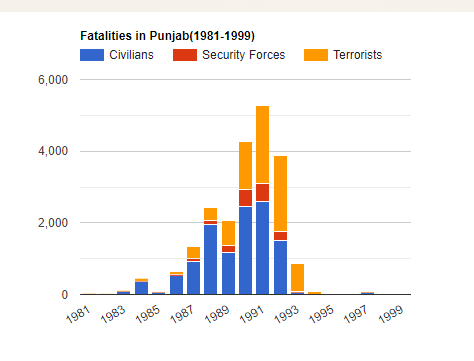
    Many Sikhs opposed the Government of India and supported Pakistan. (Then the same story – Sikhs settled in another part of the country, and Sikhs of Punjab who were not members of any Khalistan related group stood by the decision of the government.) Is the second wave of Khalistan coming? Many creepy stories related to Khalistan movement which were read in books started to be remembered. In Punjab, about 15,000 people died due to the long-running Khalistani movement. The daily life of the entire Punjab was destroyed due to this movement which lasted for almost twenty five years.

    South Asian Terrorism Portal:-  The most authoritative and comprehensive  source of  information about terrorism in our region. www.satp.org

    it was clear that the Khalistan movement is being tried once again.

    I am from the Uttar Pradesh (U.P) and I have almost five thousand friends on Facebook page. Some are also Sikhs. Some Sikh friends in real life are not from Punjab, and are as much anti-Khalistani as I am. I am not very aware of the ground situation of Punjab but what I felt is that most of the people of Punjab are against the Khalistani movement but there are some people trying to rebuild this movement with the help of the Government of Pakistan and some Sikhs settled abroad .Communist, Marxists, traitors, Lutyens gangs, who specialize in making money from every problem, will not let this opportunity go in vain.

    Pakistan;- was working to a clear, indeed to a singular aim –and that was to break india .

    Pakistan is yet not able to think of an identity except as the” not India”, except as the country whose mission it is to dismember India. For more information please visit :–http://nithinks.com/2019/10/16/now-hind-will-become-pakistan-the-slogan-of-the-next-generation-of-the-islamic-terrorists/ What  Islamization has added is the conviction that the historical animus against India is sanctified by religious sanction –that as a matter of religion, Pakistan’s mission is to undo the error of the partition, that its mission is to wrest back the entire sub-continent for Islam. In spite of 1971, Kargil and the rest, those who exercise power over Pakistan remain convinced that they can break India; that, if they cannot break India, they can bleed India to death ;if they cannot bleed India to death they can bleed India enough to hold India down to Pakistan’s level.

    The point is that all these operations were conceived and launched based on one assumption:”that the Indians are too cowardly and ill-organized to offer any effective military response which could pose a threat to Pakistan. Ayub khan genuinely believed that “as a rule, Hindu morale would not stand more than a couple of hard blows at the right time and place”

    KPS GILL:-The Sikh police officer who ended the Khalistan movement from Punjab

      KHALISTAN A PROJECT OF PAKISTAN

    Khalistan is a geopolitical project of Pakistan, says a Canada based think tank

    Khalistan is a geopolitical project nurtured by Pakistan, concludes a Canadian think tank – Macdonald-Laurier Institute in its report titled ‘Khalistan: A Project of Pakistan’, which has adverse implications for the national security of both Canada and India, observes The Times of India on September 11. The report highlights how the Khalistan movement – ‘Referendum 2020’ spearheaded by the banned secessionist group Sikhs for Justice (SFJ), owes its energy to Pakistan. The report authored by Canadian journalist Terry Milewski says: “It does not fit the Khalistani narrative that Pakistan’s treatment of its shrinking Sikh minority has brought demonstrations to the Pakistani High Commission in New Delhi. Rather, it makes it all the more bizarre that undying solidarity with Pakistan has become a kind of theme song for the American lawyer, Gurpatwant Singh Pannun, who leads Sikhs For Justice, the driving force in the campaign for a referendum on Sikh independence.”

    Pannun, the report observes, has sided with China in its dispute with India and recently wrote to Pakistan PM Imran Khan, swearing that “if India ever attacked Pakistan, the pro-Khalistan Sikhs will extend full support to Pakistan”. The report marks, as a turning point, a 2018 event when Canada’s national security report had to omit a reference to Sikh Khalistanis. The 2018 Public Report on the Terrorism Threat to Canada replaced “Sikh (Khalistani) extremist ideologies and movements” with the more generic “Extremists who support violent means to establish an independent state within India.”

    South Asian Terrorism Portal:-  The most authoritative and comprehensive  source of  information about terrorism in our region. www.satp.org

    “We should all be concerned about the future because we will have to spend the rest of our life there “Charles.F.Kettering (American inventor & Businessman)

    From Ahimsa to Algorithms: Gandhi in the Age of Social Media

    Gandhi’s ideas have to be freed from the Gandhian mafia only then Gandhi’s ideas will remain meaningful.

    Mahatma Gandhi is widely known as the Father of the Nation in India. His leadership, commitment to non-violence and dedication to India’s independence struggle have left a lasting legacy.

    His principles of truth, non-violence, and social justice continue to inspire not only Indians but people around the world.

    Even after using the internet for about 14-15 years, I used to stay away from social media platforms like Facebook, Twitter, and WhatsApp. But two years ago, I created an account on social media due to pressure from my friends.

    Last year, on Gandhi Jayanti, I was shocked to see that social media was filled with vulgar jokes about Gandhi Ji. It made me think a lot and left me amazed at the disrespect.

    MAHATMA GANDHI

    The complex relationship between Mahatma Gandhi’s ideas and the current sentiment among the younger generation in India can be seen through various lenses.

    Firstly, it’s important to recognize that Gandhi’s values—non-violence, restraint, brotherhood, and his vision of Ram Rajya—were deeply rooted in his quest for social harmony and political independence.

    These principles have stood the test of time and continue to resonate with many. However, as the world and India itself have evolved, there has been a shift in the way these ideals are perceived by different generations.

    For the younger generation, there are several reasons why Gandhi's popularity might be challenged, despite his monumental contributions to India's independence:

    Changing Nationalism: The rise of more assertive nationalism in recent times, marked by a desire for a stronger, more self-reliant India, has led to a shift away from Gandhi’s ideas of passive resistance.

    Many of today’s youth view assertive action, military strength, and national pride as more important than the philosophy of non-violence.

    This shift, particularly in the context of India’s growing global influence, contrasts with Gandhi’s emphasis on peace and restraint.

    Disillusionment with Politics: The association of Gandhi’s legacy with the political establishment, particularly the Nehru-Gandhi family, has led some younger Indians to question the relevance of his ideas in today’s context.

    The perception that Gandhi’s legacy has been used or distorted by politicians for their gain has also affected his image, leading to feelings of disillusionment among those who feel disconnected from his philosophy.

    Perception of Weakness: Some critics argue that Gandhi’s stance on non-violence made India vulnerable in certain historical moments, and this perception is often magnified in the present scenario where youth, facing contemporary challenges, might desire stronger, more direct solutions. Nationalism today often ties itself with pride in military strength and assertive diplomacy, contrasting sharply with Gandhi’s non-confrontational methods.

    Economic and Technological Shifts: The focus on economic development, technological growth, and global competitiveness in India’s current narrative can sometimes overshadow Gandhi’s ideas about simple living, self-reliance, and rural empowerment.

    The Appeal of Strong Leadership: The growing preference for strong leadership and decisive action in India contrasts with Gandhi’s emphasis on dialogue, gradual change, and non-violence.

    As the country faces new challenges, some may feel that Gandhi’s methods of struggle no longer align with the political or social realities of the 21st century.

    The younger generation may be more inclined towards rapid modernization, and the slow, deliberate pace of Gandhi’s ideas might seem out of touch with these aspirations.

    The growing anger towards the Gandhi family and the Congress party in India has, unfortunately, been linked to Mahatma Gandhi's legacy. 

    Many people believe that the present Gandhi family, which claims to have inherited Mahatma Gandhi’s political legacy, is responsible for much of the country’s current struggles. They argue that this family was imposed on India due to Mahatma Gandhi’s influence, but rather than following his principles of simplicity, non-violence, and service to the nation, the family’s political actions have often seemed disconnected from those ideals.

    This perception has fueled resentment, with a significant section of the population holding the Gandhi family accountable for the country’s political and social turmoil, which has indirectly contributed to the diminishing respect for Mahatma Gandhi’s legacy.

    It is evident that in India, especially among the youth, there is no inherent resentment towards Gandhi and his ideals. However, the politicians who have built their petty political careers under the guise of Gandhi’s name have tarnished his legacy through their actions.

    The principles of truth, non-violence, and service to the nation that Gandhi stood for have been compromised by those seeking personal gain, leading to a distorted view of his legacy. The disillusionment is not with Gandhi himself but with those who have misused his name for their agendas.

    ISRO: LAYING THE FOUNDATION OF SCIENTIFIC THINKING

    ISRO: Laying the Foundation of Scientific Thinking in India

    As the world watches ISRO’s progress, many people are eagerly waiting for the Orbiter to join Vikram on the Moon. But I want to share something different from the usual excitement.

    Famous Hindi poet Dr. Harivansh Rai Bachchan once said, “Hot iron needs to be beaten, cold iron has a long time to beat.” This means success doesn’t come overnight, and it’s the continuous effort that brings results.

    Success in any major work is achieved over time, in small steps. Each failure should be welcomed, as it helps us grow.

    A Leader Leads by Example

    Look at the example of Pullela Gopichand, who pledged his home to set up a badminton academy. Today, players like Saina Nehwal, P.V. Sindhu, and many others represent India on the international stage.

    Similarly, cricket legends like Sunil Gavaskar inspired players like Sachin Tendulkar, who not only became a global icon but also motivated many young children to follow in his footsteps. Similarly, in wrestling and boxing, there are countless success stories rooted in hard work and dedication.

    Science and India’s Progress

    Today, we’re all excited about waving the tricolor on the Moon, but let’s not forget that India’s journey in science began with simple tools like bicycles and bullock carts.

    Success should be determined by our scientists, not by others. Many in the West have praised ISRO’s mission, while some media outlets try to downplay it. But as Shakespeare once said, “Man, proud man, dressed in a little brief authority, plays such fantastic tricks before high heaven.”

    Science, like sports, can bring people together. As India moves forward, it’s more important to focus on fostering a scientific mindset than just the success of one mission.

    The Importance of Scientific Thinking

    I’m seeing a change in my own home. My son, who was once addicted to his mobile, now spends his time reading Stephen Hawking’s A Brief History of Time. While he may not fully understand the book, he enjoys it like a storybook. This is a sign of a growing interest in science across India.

    Science is not just about reading books. It’s about experimenting, creating, and exploring. Today, rockets are being built at home with aluminum foil and plastic pipes. This shift shows the future of India—one where scientific thinking is deeply embedded in everyday life.

    Thanks to ISRO, India is developing a scientific temper, and this will help us shape a brighter future.

    स्वामी विवेकानंद का अंतिम वाराणसी आगमन , और गोपाल लाल विला .

    विवेकानंद ने अपना शरीर त्यागने से कुछ दिन पहले अपने आराध्य शिव की नगरी में जहाँ कुछ समय बिताया. ( गोपाल लाल विला) राजा काली कृष्ण ठाकुर का garden house

    स्वामी जी के अंतिम दिनों  का साक्षी उनका निवास स्थल गोपाल लाल विला वर्तमान मे एक खण्डहर बन चुका है .

    वाराणसी स्वामी विवेकानंद के प्रिय भगवान शंकर की नगरी है , स्वामी जी यहाँ पहले भी आते रहे थे परन्तु इस बार सन 1902 में उनका वाराणसी में आने का प्रायोजन स्वास्थ्य लाभ लेना था।

    ये अलग बात है की स्वामी जी अपने को यहाँ भी जन -हित के विषयों से स्वयं को अलग न कर सके और गंभीर बीमारी की अवस्था में भी समाज सेवा के कार्यों जुड़े रहे.

    ————————————————————

    स्वामी विवेकानंद का अंतिम वाराणसी आगमन और गोपाल लाल विला में ठहरना.

    ———————————————————-

             L.T कॉलेज का प्रवेश द्वार.

    प्रवेश द्वार पर स्वामी विवेकानंद के लगे पोस्टर एक -दो वर्ष पुराने हैं।
    इसके अतिरिक्त स्वामी विवेकानंद के यहाँ प्रवास के संबंध में कोई जानकारी नहीं दी गयी है।

    वाराणसी नगर कचहरी के निकट अर्दली बाजार में L. T कॉलेज परिसर स्थित है।
    वर्तमान में इस परिसर के अंदर , एक पुस्तकालय , एक प्राइमरी स्कूल , शिक्षा विभाग से जुड़े घर अक्षय पात्र मेगा किचन और एक पुराना मंदिर भी है।

    वर्तमान में L. T COLLEGE के नाम से जाने जाने वाली ये जगह कभी राजा काली कृष्ण ठाकुर का Garden House (गार्डन हाउस) था। राजा काली कृष्ण ठाकुर के पिता जी का नाम गोपाल लाल था। इस भवन का निर्माण संभवतः उन्हीं के द्वारा करवाया गया था।

    GARDEN HOUSE (गार्डन हाउस)

    GARDEN HOUSE (गार्डन हाउस) 19 वीं शताब्दी के आरंभ और मध्य में वाराणसी में भारत कुछ प्रमुख राजाओं , व्यापारियों , के द्वारा विस्तृत भूमि पर विशाल भवनों का निर्माण कार्य करवाया गया था। ये सभी भवन एक बगीचे जैसे भूमि के मध्य स्थित होते थे इस कारण इन्हें गार्डन हाउस कहा जाता था।

    उस दौर के वाराणसी में स्थित कुछ अन्य प्रमुख गार्डन हाउस

    उस दौर में निर्मित कुछ गार्डन हाउस आज भी वाराणसी में देखे जा सकते हैं जैसे — काशी नरेश की नदेसरी कोठी , हथुआ नरेश की कोठी , नेपाल नरेश की कोठी , डालमिया भवन आदि।

    राजा काली कृष्ण ठाकुर के गार्डन हाउस के मध्य स्थित एक सुन्दर और विशाल कोठी स्थित थी जिसे गोपाल लाल विला के नाम से जाना जाता था।

    स्थानीय लोग इस भवन को सोंधा बास के नाम से भी जानते थे।

    1902  मे विवेकानंद  का आना एक  दूसरा अर्थ रखता था, अब वो स्वामी विवेकानंद विश्वप्रसिद्ध ,दार्शनिक और विद्वान थे, परन्तु बेहद कमज़ोर और बीमार.

    बंगाल के प्रसिद्ध लेखक शंकर ने अपनी किताब The monk  as man में chapter 4पेज 175 ,176  मे  उनकी 31 बिमारियों के बारे मे और  इन बिमारियों से दृहता से लड़ते हुए  सामाजिक भलाई मे लगे रहने का जिक्र  किया है.  

    स्वामी जी इस बार बनारस आ कर  राजा  काली  कृष्ण ठाकुर  के गार्डन हाउस गोपाल लाल  विला  मे रुके .

    स्थानीय लोग  इस जगह  को सोंधा बास  भी कहते थे .  यहाँ विवेकानंद जी लगभग एक महीना तक रुके .राजा  काली  कृष्ण ठाकुर  के गार्डन हाउस गोपाल लाल  विला  का अपने पत्रो मे जिक्र करते हुए इस स्थान को स्वास्थ्य के अनुकूल बताया था .

    स्वास्थ्य  ख़राब होने के बाद भी यहाँ  सामाज़िक  गतिविधियों मे लगे लोगों से मिलते रहे  स्वामी जी से प्रभावित हो कर “दरिद्र नारायण सेवा समिति” “poor men’s relief association”  का गठन करने वाले चारु चंद्र दास,(स्वामी शुभानन्दा) सदाशिवनन्द (आप ही ने स्वामी जी की इस बार बनारस में आगवानी की और गोपाललाल विला में उनके प्रवास के बारे मे स्वामी विवेकानंद संस्मरण नाम से एक लेख लिखा) .

    चारु चंद्र दास, जी लगभग प्रतिदिन स्वामी जी से मिलने गोपाल लाल भवन आया करते थे . आप लोगों के अनुरोध पर स्वामी जी ने संगठन का नाम” the Ramakrishna home of service”  कर दिया जो आगे चल कर वाराणसी का एक प्रमुख अस्पताल बना।

    आज ये अस्पताल रामकृष्ण अस्पताल के नाम से विख्यात है और ये वाराणसी नगर का एक प्रमुख अस्पताल है। स्थानीय लोग इसको कौड़िया अस्पताल के नाम से भी जानते हैं। समाज सेवा मे लगे राजा भिनगा उदय प्रताप से भी उनके गार्डन घर पर जा कर मिले.  केदार घाट के पुजारी से भी मुलाकात की.

    यहाँ से जाने के कुछ महीनों बाद ही(4july 1902) स्वामी जी मृत्यु हो गयी.

    स्वामी जी के अंतिम दिनों  का साक्षी उनका निवास स्थल वर्तमान मे गोपाल लाल विला एक खण्डहर बन चुका है .क्या ही अच्छा होता की सरकार भारत की सांस्कृतिक राजधानी (cultural capital of India) वाराणसी मे इस खण्डहर को एक धरोहर रूप प्रदान करती.

    भारत की सांस्कृतिक राजधानी मे  भारत की संस्कृति को बचाने वाले और सम्पूर्ण विश्व को भारत की संस्कृति से परिचित कराने वाले योद्धा सन्यासी (warrior monk) विवेकानंद की इस धरोहर को बचाने का प्रयास तो होना ही चाहिए.

    ———————————————————-

    स्वामी विवेकानंद ने गोपाल लाल विला का ज़िक्र कहाँ किया है.

    ———————————————————-

    स्वामी विवेकानंद ने स्वयं गोपाल लाल विला में रुकने और अपने अंतिम बार बनारस आने का जिक्र अपने अनेकों पत्रों में किया है। स्वामी विवेकानंद ने गोपाल लाल विला में ठहरने के दौरान विभिन्न लोगों को पत्र लिखे थे अथवा लोगों के पत्रों का उत्तर दिया था।

    इन पत्रों में स्वयं स्वामी विवेकानंद ने गोपाल लाल विला उल्लेख किया है।

    कोई भी व्यक्ति जिसकी इस विषय में रूचि हो वो स्वामी विवेकानंद के THE COMPLETE WORKS OF SWAMI VIVEKANANDA में उनके द्वारा वर्णित इस स्थान का वर्णन पढ़ सकता है।

    THE COMPLETE WORKS OF SWAMI VIVEKANANDA ADVAITA ASHRAM KOLKATA द्वारा प्रकाशित है।

    नोट :- ब्रिटिश शासन काल में वाराणसी को बनारस के नाम से जाना जाता था।

    स्वामी विवेकानंद ने गोपाल लाल विला में ठहरने का जिक्र सर्वप्रथम 7 फ़रवरी 1902 में एक पत्र में किया है।

    स्वामी विवेकानंद ने ये पत्र जोसेफिन मैकलियोड (Josephine MacLeod ) को लिखा था। इस पत्र के साथ दिए Foot -Note से पता चलता है की स्वामी जी का गोपाल लाल भवन में आगमन 4 फ़रवरी 1902 को हुआ था।

    जोसेफिन मैकलियोड स्वामी विवेकानन्द की शिष्या थीं। इनका भारत से गहरा लगाव था। स्वामी विवेकानंद इन्हें टैंटीने अथवा जो उपनाम से संबोधित करते थे। इस पत्र में भी स्वामी इन्हें जो संबोधन किया है।

    स्वामी विवेकानंद ने इस पत्र में अपने सकुशल वाराणसी पहुँचने का जिक्र किया है।

    ————————————————————-

    गोपाल लाल विला में जब हुआ स्वामी जी को अपनी मृत्यु का पूर्वाभास .

    ————————————————————-

    स्वामी जी ने अपनी एक अन्य शिष्या भगिनी निवेदिता को जिनका वास्तविक नाम मूल नाम ‘मार्गरेट एलिजाबेथ नोबल’ था को 4 मार्च 1902 में लिखे एक पत्र में अपनी बिमारियों का जिक्र किया था।
    इस पत्र में भी गोपाल लाल विला का जिक्र है।

    स्वामी जी ने भगिनी निवेदिता लिखे अपने पत्र में बताया है की उन्हें बैठने लिखने में समस्या हो रही है।
    स्वामी जी निवेदिता को लिखी चिट्ठी में बताते हैं की उनकी तबियत ठीक है पर कभी भी बिगड़ सकती है।

    स्वामी जी ने अपने सदा बुखार बने रहने और सांस लेने में होने वाली तकलीफ का जिक्र भी किया है

    स्वामी विवेकानंद इस पत्र में निवेदिता से स्पष्ट कहते हैं की ये पत्र लिखते समय उनको ऐसा लग रहा है की शायद ये उनका अंतिम पत्र हो।

    एक चित्रकार (KRIPA) की कल्पना GOPAL-LAL VILA (1902)

    वाराणसी के युवा चित्रकार कृपा द्वारा 1902 में गोपाल लाल भवन कैसा दिखता रहा होगा का काल्पनिक भव्य रूप।

    वर्तमान में गोपाल लाल विला