
“Thus a thief can seize the chance to loot the property in the house when the doorkeeper and house guards are busily engaged in putting out the fire ……In war, a burning house symbolizes a nation that is suffering a major crises or is in decline. By attacking such a nation, one can get twice the result for half the effort…..”
“A burning house falls into commotion and tumult”.
[The Wiles of War]
“Those who do not remember the past are condemned to repeat it”
(Famous warning of Santayana)

Punjab (Bread basket of India)
For some days, the farmers of Punjab have been agitating about the policies of the government. (Kisan aandolan). FARMERS MOVEMENT This movement has no support across the country. Its support in Punjab (Bread basket of India) is also negligible. Farmers across the country are supporting the policies of the government. In true democracy, protest has its own importance, and the farmers of Punjab have every right to protest. My attention suddenly shifted to a pamphlet of the Bharatiya Kisan Sangh, one of the largest farmer organizations of the country. In this pamphlet, Bharat Bandh (strike) has been opposed by this organization on December eight and this organization said that the farmers’ movement has been high- jacked by pro-Khalistan and anti-national people. Social media are filled with anti-country slogans, inflammatory statements, and pro-Pakistan narrows. How can any farmer be a traitor? There was a lot of confusion about this movement in my mind as well.

“THE HIGHEST TRUTH IS ALWAYS THE SIMPLEST”
“ALWAYS THE GREATEST FRAUD BY THE SIMPLEST MEANS”
The technology of inflicting large-scale violence is becoming easier to obtain, and –per quotient of lethality – less and less expensive. In contrast to conventional weapons – field artillery, bombers, tanks-this technology costs little. Much of it can be acquired from open sources – including the internet. And the weapons can be produced in small , isolated shacks, even mobile vans.

Personal experience: – I am a blogger, and I keep writing on issues like History, Religion, and Current -Affairs. A few months ago a post was written about the renunciation of Sikh Gurus, and the sacrifice of Sikh Gurus in defence of Hinduism. As usual, I also shared my post on social media. Surprisingly a lot of Sikhs expressed anger at this post. The number of Sikhs expressing displeasure was the same as the Sikhs who agreed with the post. Some said that Hindus have done injustice to Sikhs. Some said that Hindu and Sikh are different religions. Some directly said that Sikhs should get their own country, like Muslims have already found Pakistan. When I started to research this type of post, I found that almost all such posts were from Punjab. Sikhs are found almost all over India. (, Sikhs elsewhere in the country wrote the opposite posts emphasizing Hindu Sikh unity) Something is cooking in Punjab. A little more attention and checking the profile revealed that almost all the people, who posted anti-Hindu, were associated with a pro-Khalistani group on the face book. Another post of mine was on the relation of Kartarpur( Guru Nanak Ji had spent 18 years of his life here. Its importance can be gauged from the fact that devotees consider themselves blessed by looking at Kartarpur with binoculars from Dera Nanak. (Kartarpur is currently in Pakistan) Guru Nanak Ji also died here on 22 September 1539). Pakistan considers the sentiments of Sikhs related to Kartarpur an excellent opportunity to teach a lesson to Sikhs. for more information on kartarpur and Pakistan challenges visit :- http://nithinks.com/2019/11/08/kartarpur-historical-importance-and-current-challenges/

General Singh is extremely biased against Pakistan. he spent his entire life in making plans against pakistan.we are providing the Sikhs a lot. of facilities in Pakistan. but we should not forget that the Sikhs are also our enemies. they massacred Muslims in 1947. they raped thousands of Muslim women. they destroyed thousands of mosques. East Pakistan disintegrated due to a Sikh General. General Singh is the worst enemy of the two-nation theory. we should never forget the atrocities committed by Sikhs against Muslims. instead of giving them facilities at Nankana Saheb,Panja Sahib, etc, we should give them tit-for-tat lessons for their cruelty”…
for more information visit :- http://nithinks.com/2019/08/15/74th-independence-day-jihad-pakistan-hindu-massacre-and-traitor-media/
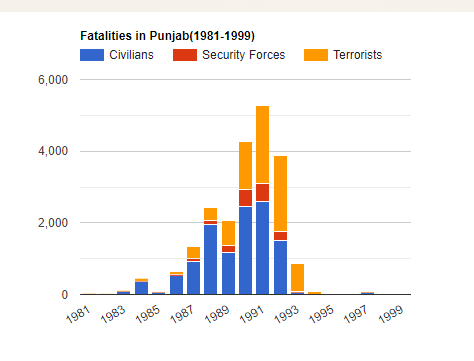
Many Sikhs opposed the Government of India and supported Pakistan. (Then the same story – Sikhs settled in another part of the country, and Sikhs of Punjab who were not members of any Khalistan related group stood by the decision of the government.) Is the second wave of Khalistan coming? Many creepy stories related to Khalistan movement which were read in books started to be remembered. In Punjab, about 15,000 people died due to the long-running Khalistani movement. The daily life of the entire Punjab was destroyed due to this movement which lasted for almost twenty five years.


In a large country like India, different modes of transport are required, Sikhs have an incredible contribution in this.
it was clear that the Khalistan movement is being tried once again.
I am from the Uttar Pradesh (U.P) and I have almost five thousand friends on Facebook page. Some are also Sikhs. Some Sikh friends in real life are not from Punjab, and are as much anti-Khalistani as I am. I am not very aware of the ground situation of Punjab but what I felt is that most of the people of Punjab are against the Khalistani movement but there are some people trying to rebuild this movement with the help of the Government of Pakistan and some Sikhs settled abroad .Communist, Marxists, traitors, Lutyens gangs, who specialize in making money from every problem, will not let this opportunity go in vain.
Pakistan;- was working to a clear, indeed to a singular aim –and that was to break india .
Pakistan is yet not able to think of an identity except as the” not India”, except as the country whose mission it is to dismember India. For more information please visit :–http://nithinks.com/2019/10/16/now-hind-will-become-pakistan-the-slogan-of-the-next-generation-of-the-islamic-terrorists/ What Islamization has added is the conviction that the historical animus against India is sanctified by religious sanction –that as a matter of religion, Pakistan’s mission is to undo the error of the partition, that its mission is to wrest back the entire sub-continent for Islam. In spite of 1971, Kargil and the rest, those who exercise power over Pakistan remain convinced that they can break India; that, if they cannot break India, they can bleed India to death ;if they cannot bleed India to death they can bleed India enough to hold India down to Pakistan’s level.
The point is that all these operations were conceived and launched based on one assumption:”that the Indians are too cowardly and ill-organized to offer any effective military response which could pose a threat to Pakistan. Ayub khan genuinely believed that “as a rule, Hindu morale would not stand more than a couple of hard blows at the right time and place”

KPS GILL:-The Sikh police officer who ended the Khalistan movement from Punjab
KHALISTAN A PROJECT OF PAKISTAN
Khalistan is a geopolitical project of Pakistan, says a Canada based think tank
Khalistan is a geopolitical project nurtured by Pakistan, concludes a Canadian think tank – Macdonald-Laurier Institute in its report titled ‘Khalistan: A Project of Pakistan’, which has adverse implications for the national security of both Canada and India, observes The Times of India on September 11. The report highlights how the Khalistan movement – ‘Referendum 2020’ spearheaded by the banned secessionist group Sikhs for Justice (SFJ), owes its energy to Pakistan. The report authored by Canadian journalist Terry Milewski says: “It does not fit the Khalistani narrative that Pakistan’s treatment of its shrinking Sikh minority has brought demonstrations to the Pakistani High Commission in New Delhi. Rather, it makes it all the more bizarre that undying solidarity with Pakistan has become a kind of theme song for the American lawyer, Gurpatwant Singh Pannun, who leads Sikhs For Justice, the driving force in the campaign for a referendum on Sikh independence.”
Pannun, the report observes, has sided with China in its dispute with India and recently wrote to Pakistan PM Imran Khan, swearing that “if India ever attacked Pakistan, the pro-Khalistan Sikhs will extend full support to Pakistan”. The report marks, as a turning point, a 2018 event when Canada’s national security report had to omit a reference to Sikh Khalistanis. The 2018 Public Report on the Terrorism Threat to Canada replaced “Sikh (Khalistani) extremist ideologies and movements” with the more generic “Extremists who support violent means to establish an independent state within India.”
South Asian Terrorism Portal:- The most authoritative and comprehensive source of information about terrorism in our region. www.satp.org

The Golden Temple, also known as Harmandir Sahib, meaning “abode of God”.
“We should all be concerned about the future because we will have to spend the rest of our life there “Charles.F.Kettering (American inventor & Businessman)


