

WALKING IN THE FOOTSTEPS OF THE BUDDHA
The route from Rajghat to Pandeypur has been used to enter the city of Varanasi since ancient times. Around 2,600 years ago, Gautam Buddha traveled to Sarnath using this same path. Even today, this route is an important part of the Panchkoshi Parikrama, an ancient religious festival in Varanasi.
Because of its historical and religious importance, many temples and ponds can be found along this route. However, the old wells here are often neglected due to the modern water supply system. That’s why I decided to focus on them in this post.
I have often walked long distances to gather information for my writing, so it is not difficult to cover a long distance.
I started my padayatra (walk) of about seven kilometers from Panchkoshi Marg at five a.m.
An Ancient Well on the Path to Sarnath
(I)

Just after the sacred confluence of the Ganga and Varuna rivers, a path leads to Sarnath. A short distance down this path, I found an old well standing on a platform about six feet above the ground. At first glance, the well had not been used for years.
There are a few steps leading up to the well’s platform. Climbing these stairs and looking inside, I noticed:
*An iron ladder placed inside the well, reaching the bottom, was likely used for cleaning.
*An iron pipe is connected to a motor to draw water from the well.
*The well’s structure was octagonal.

I learned that the water from this well is not used for drinking. Instead, it is used to wash vehicles and clean nearby houses. The residents rely on taps and hand pumps for clean drinking water.
A Forgotten Well Along the Ancient Route
(II)

Walking another two to three hundred meters ahead, I came across another well that was completely covered. According to the locals, this well has been sealed since 1980, as the introduction of taps and hand pumps made it unnecessary.
The water used for bathing was not wasted. It flowed through the drain built on the platform and was collected in a nearby stone vessel, where cattle could drink from it. This well is a clear example of the historical Hindu tradition of conserving every drop of water.

carved well channel: a silent testament to the exquisite craftsmanship of a bygone era. The delicate engravings on the stone whisper stories of devotion and meticulous artistry, reflecting the reverence with which water was once revered.
Time may have dimmed its luster, but the good channel still stands as an enduring emblem of a rich cultural heritage, where every carved motif tells a tale of ingenuity and sacred utility.
(III)
Kapil Dhara
A little further ahead is Kapil Dhara, a sacred place for Hindus. It is an ancient religious site with a beautiful pond.

On the road leading to Kapil Dhara, I found an ancient well that has been renovated multiple times, though its water is no longer in use today. Across the road, there are several Dharamshalas, which were once used as resting places for pilgrims. Each Dharamshala has its temple and well. Unfortunately, the condition of these wells is poor, as they have not been in use for over a century.

Panch Koshi Parikrama
The history of the Panchkoshi Yatra is difficult to trace, but it is known that during Islamic rule, there were several attempts to halt the pilgrimage. However, with the rise of the Marathas in the 18th century, temples began to be rebuilt in Varanasi, and the Panchkoshi Yatra regained its importance.
To make the journey more convenient for Hindu pilgrims, numerous buildings, Dharamshalas, and wells were constructed and renovated. Most of these structures were built by the Maratha rulers.
The Panchkoshi Yatra was also quite popular in South India during the 18th century. People who undertook the Parikrama in South India were considered to earn special merit. The Kapil Dhara Dharamshala is one such example of the sacred sites built for pilgrims during this time.

The famous Vishwanath Temple in Varanasi was rebuilt by Maharani Ahilyabai Holkar between 1777 and 1780. During the Maratha rule, many temples were constructed in Varanasi, and the Dharamshala at Kapil Dhara is one of the significant structures from this era.
This Dharamshala was likely built in the late 17th or early 18th century by the Marathas, contributing to the religious and spiritual heritage of the region.

The priest of Kapil Dhara Tirtha shared his thoughts on the changing nature of pilgrimage, saying, “In the past, pilgrimage was a long and challenging journey that took months to complete.”
Today, with the availability of better transportation, the pilgrimage has become much easier. While there are more pilgrims than before, many no longer need to stay in places like Kapil Dhara. Pilgrims traveling from distant areas prefer staying in hotels in the main city, arriving by bus or car, and leaving after a short visit. As a result, the traditional Dharamshalas and wells have become less relevant.

Shiv temple inside Dharamshala

Inside the Dharamshala, there is an octagonal well that is no longer in use. However, it is cleaned once a year during the Panchkoshi Yatra, keeping the tradition alive.
A few timeless glimpses of the ancient Dharamshalas, standing as silent witnesses to history and devotion.


This well has a hexagonal structure and was built later. The name of the person who constructed it is written on its wall. According to the inscription, the well was built in 1890 AD. Some domesticated cattle can be seen around the well, seeking relief from the intense heat.

There were pillars at the four corners of this well, but one of them is now broken. The remaining three pillars still clearly show the shape of an urn.
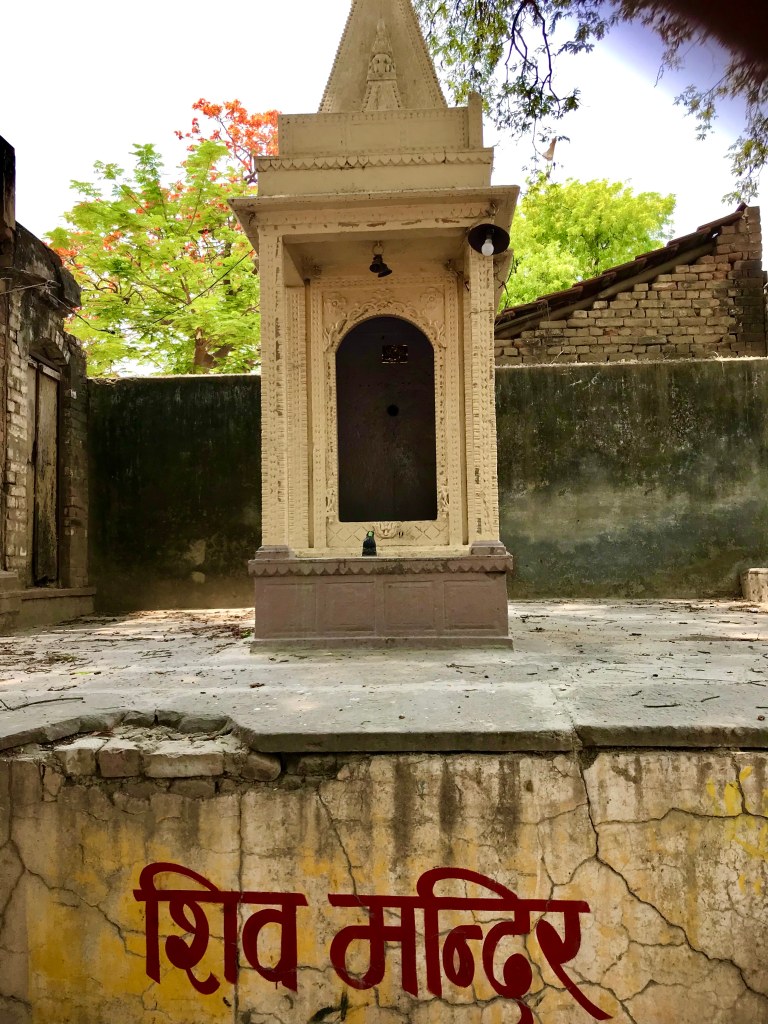
Shiva Temple
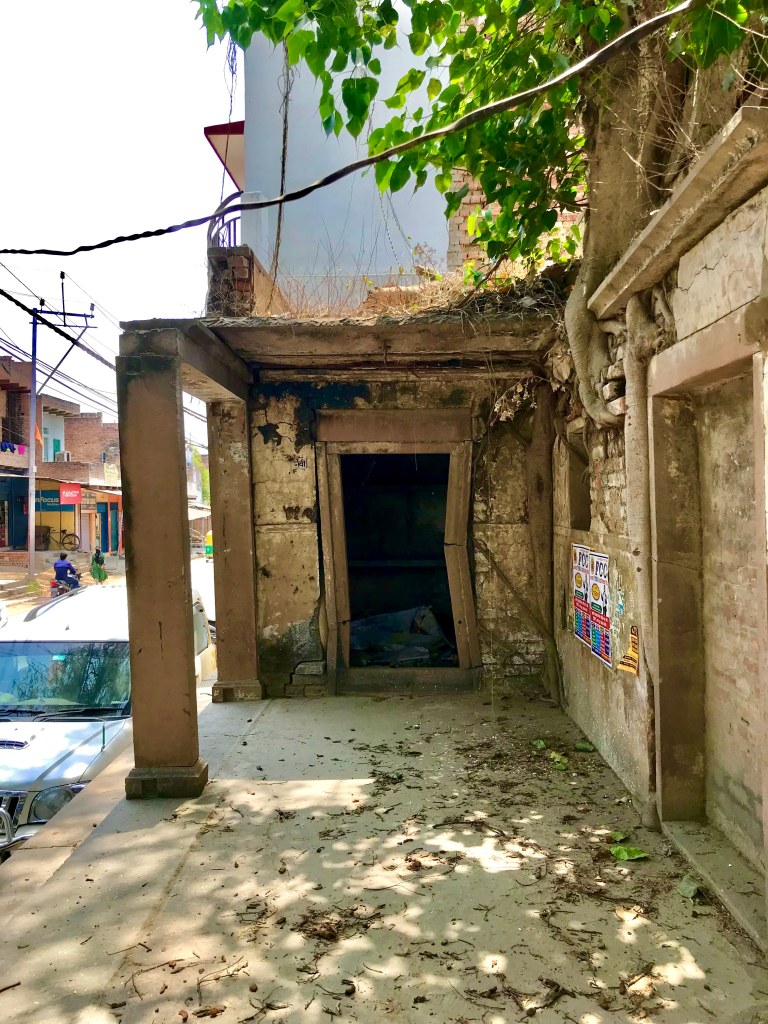
I saw a small Shiva temple on the side of the road. Made of sandstone, the temple looked beautiful and stood on a square stone platform. It is well-preserved and remains in good condition even today. However, the Dharamshala next to the temple is almost in ruins. The well attached to the temple has been closed and is no longer in use. Local shopkeepers informed me that a large part of the temple courtyard now belongs to a school situated next to it. Since the school was closed, I couldn’t see that part of the temple. The temple structure dates back to the 18th century.

(IV)
HANUMATAISHWAR MAHADEV

I drank water from this well, and it is undoubtedly clean and safe to drink.
(V)
SWARG BHUMI (paradise Land)

PRITHESWAR OR PRITHVISHESHWAR
HISTORY:-
This ancient well was rebuilt by Baijnath Ji of Banaras in 1753 AD. In 1851 AD, Gopinath Ji, Veni Ram Ji, and Kripa Ram Ji of Maharashtra renovated it again. The Gyani Fateh Ram Ji constructed the Shiva temple and Dharamshala located on the well. Later, other people completed the work of repairing this well and the building.
Structure:
This octagonal well is located in the middle of a two-story building. A temple is on the top floor of the building. However, the well is no longer in use.
Most of the ancient wells along this route have an octagonal shape.
Surprisingly, the local people, especially the younger generation, are unaware of the history of this ancient route. Hindu religious texts, Jataka tales, and Buddhist literature provide detailed descriptions of this path. Unfortunately, local history is not included in the school curriculum.
Path to Kashi: Hidden Treasures Beneath the Ancient Wells
The wells built along this route were certainly reconstructed in the 17th century, but their origins undoubtedly date back to much earlier times.
Wells have always held great significance in Hindu religious traditions, where providing water to a thirsty traveler is considered one of the highest acts of virtue.
This ancient route served as the gateway to Kashi, the holiest city for Hindus, drawing countless pilgrims and travelers over the centuries. The discovery of some of Varanasi’s oldest sites has only taken place in recent times, revealing the hidden layers of its rich history.