
Paris and Varanasi: A Tale of Two Cities That Illuminate the World in Different Ways
In the Western world, Paris is known as the “City of Light.” This name comes from its important role during the Age of Enlightenment when it became a center for ideas, art, and science.
In the 19th century, Paris was also the first city to use gas street lamps, making it even more famous for its bright streets at night.

| Artist: William Simpson (1823-1899) Title : Indian woman floating lamps on the Ganges |
|---|
On the other hand, in the Eastern world, Varanasi is also called the “City of Light,” but for different reasons.
Varanasi, one of the oldest cities in the world, is a major religious center for Hindus. The city is known for its spiritual practices along the Ganges River, where lamplighting during rituals symbolizes the light of knowledge and the path to spiritual freedom.

So, while Paris and Varanasi are called the “City of Light,” the meaning behind the name differs in each place. Paris represents the light of knowledge and progress, while Varanasi represents spiritual light and enlightenment.
Dev Diwali: Festival of Lights in the City of Lights
The Meaning of Dev Diwali
The word Dev-Deepawali is derived from two terms: Dev, meaning the Hindu Gods and Goddesses, and Diwali, the festival of lights celebrated by Hindus. Diwali, the vibrant festival where homes are adorned with diyas (small oil lamps), marks the triumph of light over darkness.
The Divine Reasons for Dev Diwali
(I)
Kartik Purnima: The Festival of Lights and Divine Victory

Kartik Purnima, the full moon night, is a special day in Hindu tradition, as it is believed that Lord Shiva defeated the demon Tripurasura. Due to this event, Kartik Purnima is also known as Tripuri Purnima.
One of the most significant celebrations of Kartik Purnima is Dev Deepawali, a grand festival held in Varanasi.
This festival takes place fifteen days after Diwali, on the full moon night of the Hindu month of Kartika. During Dev Deepawali, thousands of lamps are lit along the banks of the Ganges River. The atmosphere is filled with devotion and beauty as the Aarti is performed on the river, creating a breathtaking scene of light and spirituality.
(II)

On Dev Diwali, the ghats along the riverbanks are beautifully lit up with thousands of earthen lamps. The sacred Hindu symbols, such as Om and Swastika, are also decorated with lamps, adding to the spiritual glow of the celebration. The entire scene creates a stunning atmosphere of light, reverence, and devotion.
Dev-Deepawali: A Festival of Light and Divine Presence

In North India, Dev-Deepawali is a special day when it is believed that the Gods descend from the heavens to bathe in the holy Ganges River.
To welcome the divine presence, people light diya lamps—small, cup-shaped oil lamps made of baked clay—at temples. Traditionally, devotees also place these lamps along the banks of the Ganges after taking a sacred dip in its waters on this auspicious day.
Ancient Hindu Festivals Shine Globally: How Diwali Became a Worldwide Phenomenon
As the world became more interconnected, the charm and beauty of Dev-Deepawali began to capture global attention. Through the power of media and globalization, this sacred festival, with its radiant display of lights and reverence for the divine, spread beyond India’s borders, attracting people from all corners of the world. The glow of countless diyas on the riverbanks now symbolizes not only a deep spiritual tradition but also a celebration of unity, light, and devotion shared by many cultures worldwide.
In Varanasi, the holiest city for Hindus, the Ganga River flows for many kilometers along the city’s banks. The places where the land meets the river are called Ghats, and they are decorated with lamps. The sight is breathtaking. When millions of earthen lamps are lit together, their flickering light brightens up the entire area. It’s a scene that seems unique and unlike any other place.

From Preparation to Illumination: The Journey of Diyas on Dev Diwali
On Dev Diwali, priests create beautiful geometric shapes along the banks of the Ganges using earthen lamps and flowers. The preparation for this grand display is a full day’s marathon of work.
First, the earthen lamps are cleaned by dipping them in the holy water of the Ganges, and then they are carefully dried in the sun. Once dry, a cotton wick is placed in each lamp, and the diya is filled with mustard oil, ready to light up the sacred banks of the Ganges in a mesmerizing glow.

The Ganga Banks Sparkle with Diyas on Dev Diwali
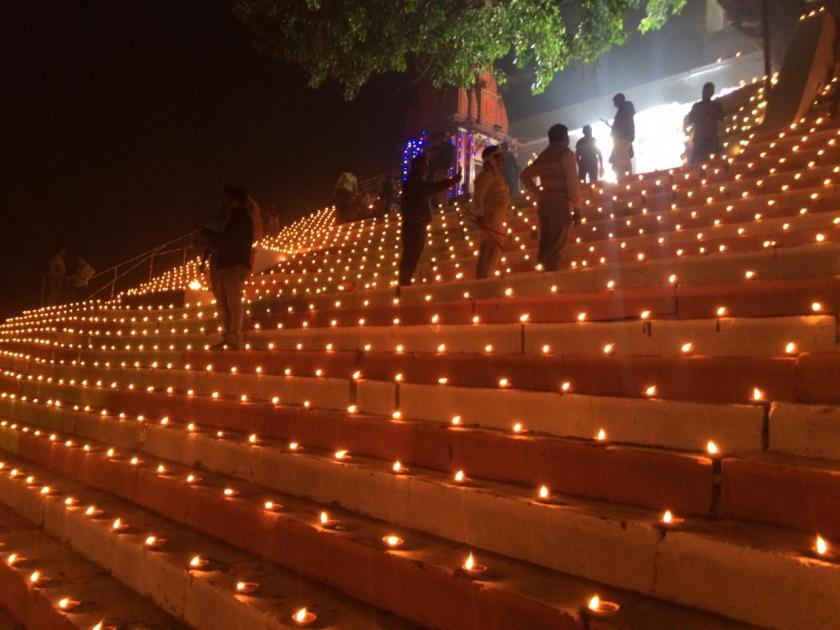

In recent years, many ghats have started using artificial lights, laser shows, and big fireworks, but I don’t like it.
What stays with me is the sight of rows of earthen diyas, their flames flickering in the wind, and their reflections on the Ganga water. The priests reciting Hindu prayers, people bathing in the holy water, and others floating flowers and diyas in the Ganga create a unique atmosphere. Women sitting on boats performing Ganga Aarti adds to the beauty of it all. This moment is unforgettable.
Anyone, no matter where they live or what religion they follow, should experience this moment at least once in their life.

Beautiful photos and interesting background on the origins of the festival.
Sumptuously!!!!
Wonderful post.nice quote of Mark Twain.Dev-Deepawali of Babaras is most famous.beautiful post.
Babaras is typing error.it is Banaras.